The Greatest Story Ever Told: Orlando (Sally Potter, 1992)
"TS" stands for "Tilda Swinton."
First things first: The final order cut-off for the first issue of Clayface: Celebrity Dirt will be this Monday, June 15. Get them in now and give Basil Karlo the adoring audience he deserves.
Dead Teenagers #3 is still at your comic shop and the usual digital retailers. Dead Teenagers #4 will be out on June 17.
And, of course: DILF: Did I Leave Feminism is still available, in both book and smell form. You can also pre-order Be Not Afraid, which will be out in collected edition in July.
What if it were possible for movies to be normal about trans people?
It’s not something you can expect in the present day. Half a decade of outright culture war has charged every cinematic Representation of Transness with political import: Either the director is made to argue for and explain the humanity of the trans characters, or it’s a crude and dehumanizing caricature. In the most recent Scary Movie, for example, a crowd reportedly stabs a trans character to death while shouting "fuck your pronouns," and this is meant to be a "joke," which is "funny;" anything made by a trans person, or even a non-monstrous cis person, therefore has to educate the audience as to why this is Bad.
I don’t blame trans filmmakers for this. There are plenty of contemporary trans directors — Jane Schoenbrun springs to mind — who don’t seem at all interested in playing Representational games with their work. Schoenbrun’s eggy trans characters in We’re All Going to the World’s Fair or I Saw The TV Glow seem to interest Schoenbrun primarily as entryways to a state of mind, a worldview, a vibe; the characters’ disconnection from their own lives allows the storytelling to be dissociative and off-kilter in various cool ways. (There are a lot of movies about the Internet, but nothing captures the vast echoing loneliness of it like World’s Fair.)
Still, in the current climate, even a filmmaker as resolutely individual as Schoenbrun has to be making a Point About Transness, in order to justify public interest in their work. I Saw The TV Glow cannot just be a great film about growing up and midlife regret, which it is; it also has to be a Trans Film that educates the audience about Trans Issues. This is quite the burden to place on a story that is, intentionally, an opaque mindfuck.
It’s a symptom of the age; of the Trans Question becoming so ubiquitous and so loaded that every trans person, real or fictional, has to spend their life answering it.
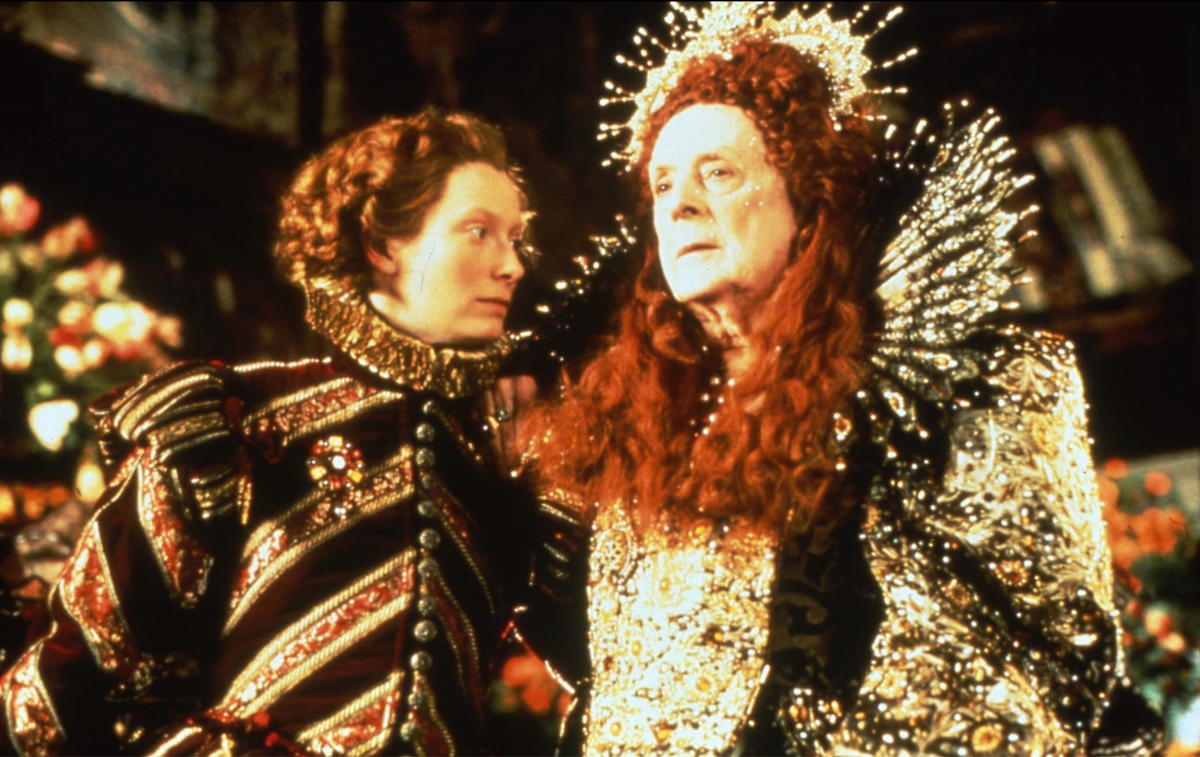
But what if I told you that at some point, in the almost-recent past, none of this was necessary? What if I told you that you could make a movie that is about transition — a movie in which the main character transitions; a movie in which the experience of transition is treated as dramatic, eye-opening, sexy, funny, all the things it is in real life — without any of the baggage? What if there was a movie made in 1992, based on a novel published in 1928, about someone who transitions, and it was good?
What if, my friends: What if Orlando? Ask no longer, for Orlando has arrived.
This newsletter is the backbone of my income. However, I also love attention, so I'm selling cheap subscriptions for Pride. Click to feed both my family and my ego: