Aaahh!!! Real Monsters: Black Christmas (Bob Clark, 1974)
The only thing scarier than needing an abortion in 1974 is needing one today.
It is happening again: Dead Teenagers #4 is now available at your comic shop and the usual online outlets. Good news – it's the really sad one! Pick it up, and then pre-order the (comparatively less sad) finale before FOC on Monday, June 22.
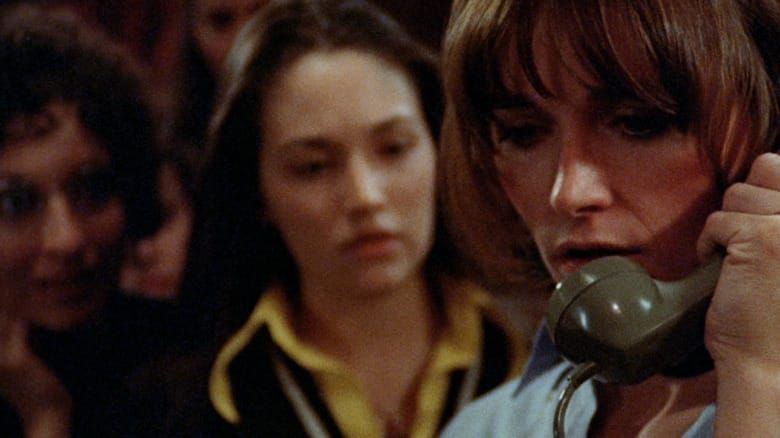
Watching Black Christmas in 2026 is like seeing time run backwards. It has a plausible (though disputed) claim to being the first slasher movie; certainly, it lays out the basics of the genre – a group of young women in high school or college, a masked killer, drugs and premarital sex as harbingers of doom – in ways that would define everything going forward. Half of all slasher movies, from The House on Sorority Row to Scream, are trying to be this movie.
So Black Christmas is that — a first root struck down in the ground, a forerunner — but it is also a better, more unapologetic movie about abortion than anything you will see today. Its heroine, Jess, is pregnant, and doesn’t want to be; her controlling boyfriend, Peter, is furious about her decision to get an abortion; his attempts to control her become increasingly scary over the course of the film.
There’s nothing preachy about how the movie handles this. It’s blunt and matter-of-fact. Yet the movie is absolutely clear that Jess is in the right and Peter is in the wrong, in ways that modern stories still struggle to communicate. (I will never cease to remind people that, in the “radical” One Battle After Another, a pro-abortion activist carries her rapist’s baby to term even though she doesn’t want children, seemingly just because that’s how movie pregnancies work.)
You can chalk this up to the movie’s historical moment: It came out in 1974, the year after the Roe v. Wade ruling, when abortion was not yet a culture war issue. Modern abortion stigma didn’t take off until Evangelical Christians and white supremacists rallied around abortion as a “wedge issue” they could focus on after losing the battle for school segregation. So, for a brief moment in American history, abortion was just a medical procedure that some people needed — the same way TV shows from the mid-2010s often featured trans or gender-questioning children, without realizing that those children’s medical care would be outlawed a few years later.
Black Christmas was of its time, and is now ahead of our time — not because it is radical, but because we’ve gone backward. Black Christmas never set out to be a political tract — it is, first and foremost, a scary movie. It’s just that it sets out to scare you with the premise that young women are human beings, who want to control their own lives, and that they’re forced to navigate a world full of men who want to hurt them. This is still very scary. It is also still very true.
This newsletter is the backbone of my income. However, I also love attention. Thus, I'm selling cheap subscriptions during Pride month. Click to feed both my family and my ego.