Transformer: Velvet Goldmine (Todd Haynes, 1998)
A few thoughts on the queer post-apocalypse.
Clayface: Celebrity Dirt #3 is out now at comic shops and the usual digital platforms. Today is the final order cut-off for Issue #4, but you can pick it up in person on October 14.
You can also pick up Be Not Afraid in collected edition; DILF in both book and smell form; and put in a pre-order for the collected edition of Dead Teenagers, which will be out in less than a month, on October 6.
Pre-ordering Dead Teenagers is maybe the single most important thing you can do to make sure bookstores stock and promote it it, and thus keep the Jude Doyle Comic Book Experience going a little while longer. So, if you've done it: Thanks!
It’s election season, 2026, which means that I can pick up my phone any day, 24 hours a day, and witness a screaming fight about whether I have the right to exist as a transgender person. It’s a three-sided debate, as far as I can see, and the three sides are (1) other transgender people, whose answer is “yes,” (2) Republican politicians, whose answer is “no,” and (3) Democratic politicians, whose answer is “no, because the Republicans won’t like it.”
#TexasSenate
— Politics & Poll Tracker 📡 (@PollTracker2024) September 9, 2026
James Talarico (D) tells Fox News he opposes trans athletes competing in women’s sports.
“I oppose trans athletes playing in girls’ sports if it endangers safety and fairness. Every sport has to be safe and fair.” pic.twitter.com/gXCy7H0N0v
Ugh.
#IowaSenate
— Politics & Poll Tracker 📡 (@PollTracker2024) September 11, 2026
NBC News: Josh Turek (D) opposes transgender athletes in women’s sports
“As someone that spent a lot of my life in high-level sports, I don’t believe that biological males should compete against females in sports.” https://t.co/rmpfX9ndJl pic.twitter.com/MMGx9F9hEL
Ugh.
“I do not support boys playing in girls sports. This is already settled law in Ohio, and as governor I will enforce and uphold the law,” said Dr. Amy Acton, the Democratic gubernatorial candidate in Ohio.
— Danny Eldredge (@danielgeldredge) June 30, 2026
https://t.co/wqZUpEgCX6 via @toledonews
UGH.
I’ve tried to stay out of this — my record of engaging productively with these arguments is not great, to put it mildly. I think I’m just too earnest to cope with electoral politics, with its canny cynicism and “truths” that perpetually shift to fit the needs of the moment. In politics, a concept like “human rights” — or trans existence, or feminism, or the sanctity of human life, or any of the seemingly unshakable and eternal values I’ve seen go in and out of fashion in my brief lifetime — is valuable until the precise moment it stops winning arguments. When that happens, people will jettison it so quickly they’ll forget they ever believed it in the first place.
They probably never believed it in the first place. That’s probably why this happens. Still, I’m not good at this: To me, things are true because they’re true, and right because they’re right, whether or not anyone else believes them. Human beings have value because they’re human beings; because a human life is one of the few truly irreplaceable things in this world. Each of us only gets one, and a limited time in which to live it, and when we lose it, we lose everything — no-one else has the right to control that life, let alone take it away. I can’t make a reasoned, political argument for why that stance will win elections. I can only tell you it’s true, the same way it’s true that rain falls from the sky and the sun comes up every morning.
I, like, actually really believe all the shit I believe, so I’m bad at politics. What I’m good at is watching movies, and I do that a lot. However, I still live in the same world that everyone else does, and history moves through and around me, and changes the things I’m seeing. Before this year, for example, I don’t think I ever really got the point of Velvet Goldmine.
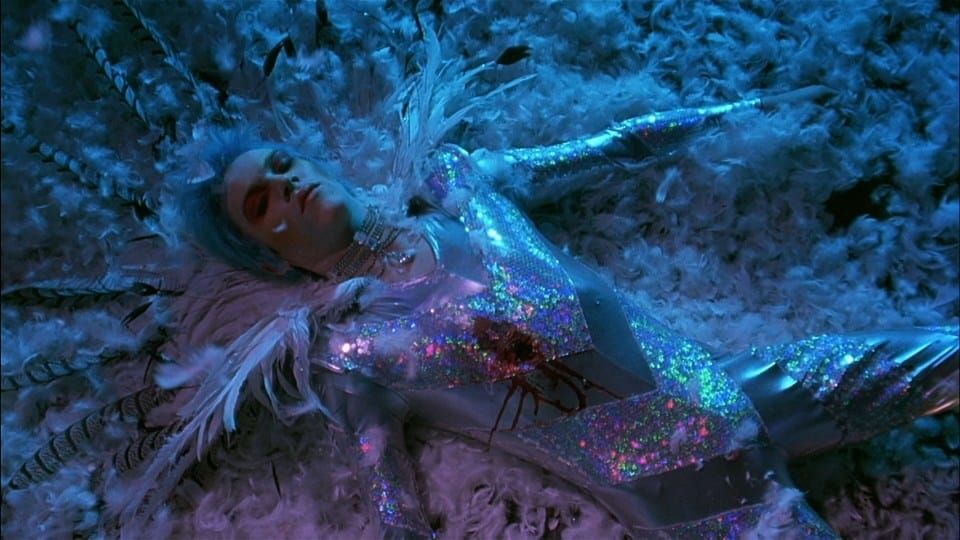
Velvet Goldmine is an unofficial David Bowie biopic — so deeply unofficial that it uses neither Bowie’s name (his biography is mostly attributed to a fictional pop star named “Brian Slade”) nor his music, because Bowie hated the movie and threatened to sue the pants off director Todd Haynes unless he was kept out of it. Velvet Goldmine is a good movie, but given that its entire point is that Bowie was a bootlicking, Reagan-humping fraud who betrayed the queer community in their hour of need, you can see why he wouldn’t get the appeal.
I watched Velvet Goldmine for the first time in high school, and while I enjoyed it, I thought its core message — “David Bowie used to be gay and talented, now he’s straight and sucks” — was unnecessarily mean-spirited. Bowie still made a lot of great music after the Ziggy Stardust era, and sexuality is fluid, and bi men are still queer, even when they marry women, and so on.
All that can be true, and it can also be true that David Bowie picked a very convenient moment to realize he preferred the ladies: In 1983, two years into the Reagan administration, one year after researchers changed the name of “Gay-Related Immune Deficiency” to “AIDS,” he came out as heterosexual on the cover of Rolling fucking Stone and claimed he’d only thought he was bisexual because he was young and confused, which was — and these are Bowie’s exact words — “the biggest mistake I ever made.” At the precise moment when queer people most needed a high-profile ambassador, he made sure we didn’t have one, and that none of our dirt would rub off on his sparkly little outfits.
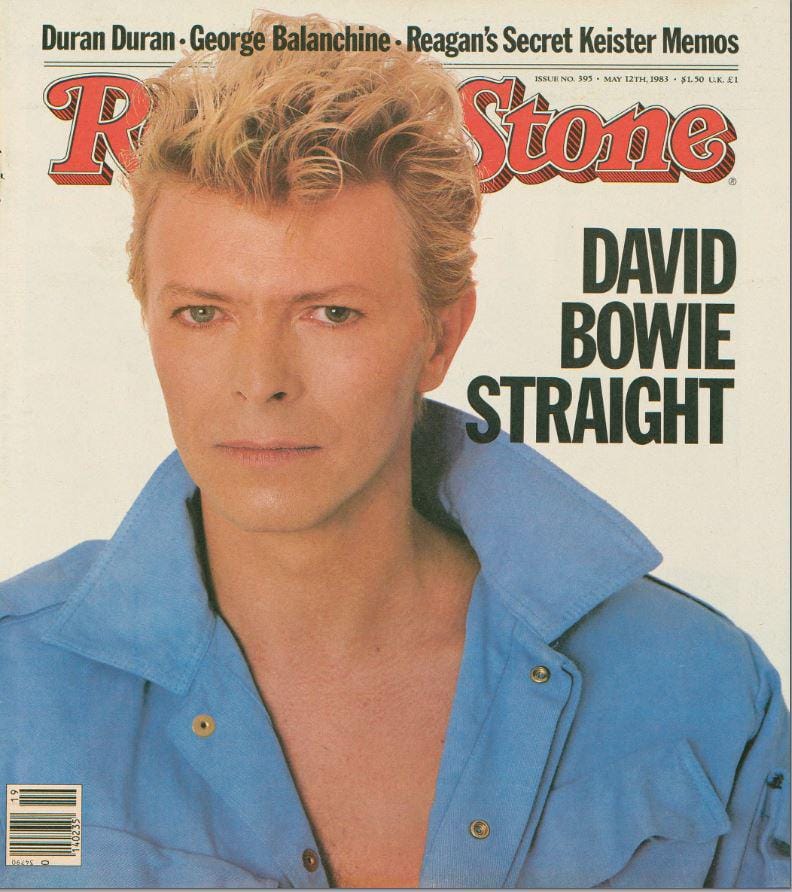
So the critique doesn’t feel quite so mean-spirited any more; it’s pointed, and harsh, and incomplete given the wider context of Bowie’s life and work, but it isn’t wrong. More to the point, when I rewatch Velvet Goldmine in 2026, it doesn’t seem to be a movie about David Bowie at all. It’s about an era of queer freedom and joy that vanished in the face of backlash: How, for a brief moment in time, it was okay, acceptable, even fashionable to be both queer and gender non-conforming, and how the Reagan ‘80s swept in and shut that down.
You are beginning to see where I’m going with this, I trust. That’s okay. We’ll get there together.
Our viewpoint character is never Brian Slade — who remains an enigma, presented Citizen Kane-style through the memories of his friends and lovers — it’s Arthur (Christian Bale), a kid growing up in London during the glam rock era. He can’t buy a Brian Slade record without being bullied. His parents are horrified by Slade’s open faggotry. But Arthur knows he’s gay, and through his love for Brian Slade, Arthur sees, for the first time, what it might be like to be an open, proud, happy queer man — a man whose strength comes from his queerness, a man who goes out into the world in lipstick and glitter and demands to be adored.
It’s not that homophobia goes away. It exists, and remains powerful: When Arthur’s parents find him masturbating to a picture of Slade with his lover Curt Wild (he’s fellating Wild’s guitar, Ziggy Stardust-style) they beat him and kick him out of the house. But the existence of an openly queer, openly femme superstar carves out a place for Arthur to exist in the world, and a way for other people to understand him. Watching the press conference where Slade comes out, Arthur imagines himself jumping up and pointing to the television and screaming “THAT’S ME! THAT’S ME!”
Whether Brian Slade is a fraud (he is) or an opportunist (he is) or a careerist (he definitely, definitely is) doesn’t really matter. Arthur is real. Arthur isn’t pretending. The image of Brian Slade, regardless of the actual person or his politics, is what allows Arthur to know how real he is for the first time.
Ten years later, it’s 1983, and Arthur, now a journalist, is fucking miserable. His hair has been cut and the rainbow color washed out. There’s no glitter anywhere near his person. He does not mention his queerness to colleagues — when he’s assigned to write about Brian Slade, he says it’s “because I’m the resident Brit,” not because he’s gay. It’s not just that Slade’s joyful, matter-of-fact queerness is in the past, it’s that it now feels unimaginable: “In the ‘80s, there would have been fighting in the street,” Arthur tells us, about that press conference. “In the ‘70s, it was more like dancing.”
Yes, that’s a “Dancing in the Street” reference. There are a lot of references in this movie. But if you can hear that line without thinking of this recent Lilly Wachowski interview, in which the most prominent and successful trans artist in the world tells us she can no longer get the greenlight for trans art, you’re more blissfully removed from current events than I am.
There are poseurs and opportunists in every cultural moment. Demi Lovato and Miley Cyrus were both non-binary for about as long as it takes to open and drink a can of beer. Pharrell saved masculinity by wearing skirts every once in a while for a few months. I guess there was that one time when Pete Davidson wore a dress. When Sean Baker cashed in on the trans tipping point with Tangerine in 2015, it was a cynical move, and the results were creepy and sort of transphobic, despite God-tier performances from trans actresses Kitana Kiki Rodriguez and Mya Taylor (who reportedly had to rewrite a lot of the script themselves to avoid a full-on hate crime). But the fact is that, in 2015, “being a trans ally,” or even being sort of trans yourself, was seen as something you could cash in on — something you could use to burnish your cred as an artist or progressive — and now, it’s seen as something to run away from. Something to forget you ever supported, forget you ever were.

Forgetting is nothing new. In 1971, David Bowie released an entire song about how much he just absolutely loved sucking dick; in 1983, he was rewriting queer songs to make their lyrics straighter. Lou Reed (represented here by “Curt Wild,” aka Ewan McGregor as a hybrid of Lou Reed, Iggy Pop, Mick Jagger, and, somehow, Berlin-era Bowie) went from marrying a trans woman to discarding her and deleting her from his biography, from wearing makeup and fake nails on stage to swearing “no more bullshit, no more dyed-hair faggot junkie trip.” No-one even remembers the era when Mick Jagger was sort of gay (and reportedly sleeping with Bowie); the crusty, gross-Grampa heterosexuality of his current persona has erased that memory so thoroughly that no-one even remembers to list Jagger as one of the people Ewan McGregor is playing, even though Jagger is the one who was discovered naked in bed with Bowie by his wife.
Lou Reed and David Bowie are dead now, and history has gently reshaped them back into queer icons and gender trailblazers, forgetting all the moments when they refused that title. But the point is not them. The point is never them. The point was always Arthur — how, for just one moment, he lived in a world where men like him were visible, and beautiful, and their lives were something to aspire to, and how, just a decade later, he’s been shoved back into the shadows so hard he doubts he’ll ever see light again. The gap from 1972 to 1983, like the equally sized gap between 2015 and 2026, is so huge that the past feels like a different planet. Like the surface of Mars, where the Starman was born.
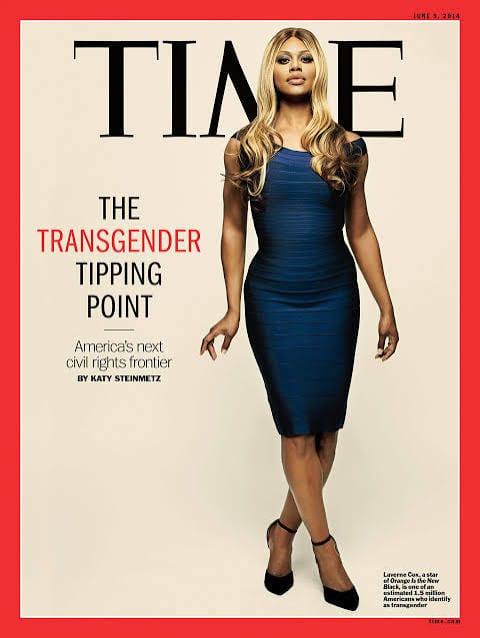
It’s not that Brian Slade was real. It’s not that Ziggy Stardust was real. It’s not that a TIME Magazine Cover was ever the ultimate end point of trans liberation, or that Tangerine was the best story ever told about trans women, or that all queer people everywhere needed Pete Davidson to expose his kneecaps in order to feel good about themselves. But when all of that goes away, what you’re left with is a world that has never wanted people like you in it, and where no-one even bothers to pretend otherwise any more. You’re left with the sense that all that “allyship” was a lie, a fad, a fashion statement; that it failed to help even one kid like you grow up more happy, more loved, or more safe, because that kid was never really the point.
“We wanted to change the world and we wound up only changing ourselves,” Curt Wild tells Arthur, about the Glam Tipping Point.
“What’s wrong with that?” Arthur asks.
“Nothing,” is what Curt tells him, “as long as you don’t look at the world.”
It’s not new to say that queer progress has occurred in a series of breakthroughs and backlashes, and that with every resurgence, the high-water line is drawn just a little higher — for instance, we’re fighting over trans rights this year, not over gay ones. Transness was always a part of this picture, and always a part of Velvet Goldmine, for that matter. (“Jack Fairy,” the proto-Bowie who seems to have no precise analogue in rock history, is no-one if not Candy Darling or Jackie Curtis — all the genderqueer and transfeminine performers who provided glam with its most useful inspiration, but were never treated as peers by the men who came to define it.) In 1998, Haynes didn’t even use the word “trans,” let alone “non-binary” or “genderfluid.” In 2026, it’s all you can see.
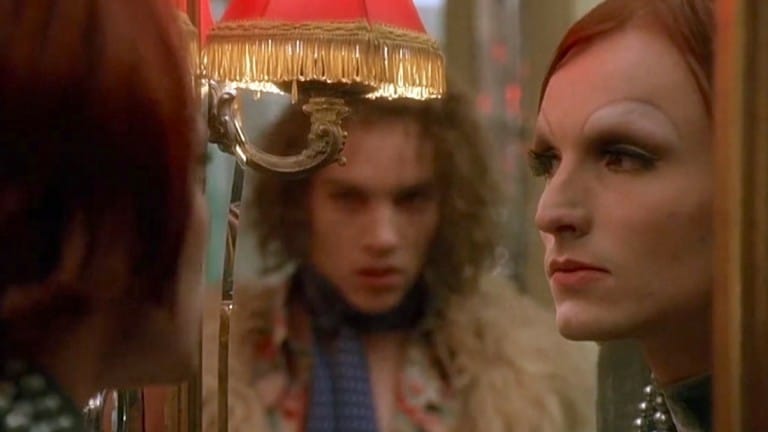
So we learn to see more, to name more, to make more and more people real, every time this happens. But we’re not in that part of the cycle. We’re in the forgetting, where things that used to be brave suddenly become risky, where all our deep and eternal values hit their expiration dates and our unshakable principles get shaken and exchanged for new ones.
There are people who can’t just turn back, who can’t become unreal whenever it's convenient, and they’re the ones who suffer most — now, then, always. I don’t know what I’m trying to do by reminding you of this. Many of you know it already. What I’m asking, I guess, is that you do the seemingly unthinkable: Actually, really believe all the shit you believe, whether or not it’s safe to believe it, whether or not you get anything in exchange. What’s true is true, and what’s right is right, and if someone was a human being yesterday, they’re still human today, and their life still has value, even if nobody wants to hear it. Don’t change your tune just because everyone else has. Raise your voice. Keep right on singing my favorite song.
Velvet Goldmine is streaming on the Criterion Channel. This song is not about Meta AI, but it might be about how long it takes straight people to get bored of pretending to care about this trans shit.