The World Is a Vampire: The Addiction (Abel Ferrara, 1995)
Dead Teenagers! Plus, starting vampire month strong with my favorite vampire movie of all time.
Heads up, my spooky friends: It's October! And it's also pub day for the trade paperback of Dead Teenagers, which you can buy in any self-respecting store and the usual, non-respectable digital outlets. It has some primo Giant Lizard content you won't get in the original issues, which, in my mind, is enough reason to pick it up.
I had tons of fun working on Dead Teenagers, and now that the trade is out, it's fully out in the world and in your hands. So thank you, to everyone that read it and pre-ordered it and recommended it to their friends. I feel like we're probably friends on some spiritual level, unless you didn't like it, in which case we don't have to hang out.
First of all: The title of this post? The one readers of a certain age can hear sung, in the mellifluous mosquito-whine of one Billiam P. Corgan, almost more than they can read it? A trans guy wrote that.
You may not know this — you’d have to be into horror literature, or the history of queer horror, or 1990s Goth culture, to get this intel, whereas all you’d have to do to hear the Smashing Pumpkins song is to be alive in 1995 — but in 1992, Billy Martin, writing as Poppy Z. Brite, published the following line in his cult-hit debut novel, Lost Souls:
But Laine should have learned by now that when you have too much faith in something, it is bound to hurt you. Too much faith in anything will suck you dry. In this way, all the world is a vampire.
So there you have it. No matter how much of a huge, flaming transphobe Billy Corgan is in the present day, he still has to wake up, every morning, knowing that the most famous lyric of his career was stolen from a trans person. Take that, Billiam.
I bring this up for two reasons: First, because I wish Billy Corgan ill on a personal level. Second, because the Billy Martin quote seems like an appropriate introduction for The Addiction, which is — if not quite the best vampire movie ever made, though it’s close in moments — certainly my favorite vampire movie of all time.
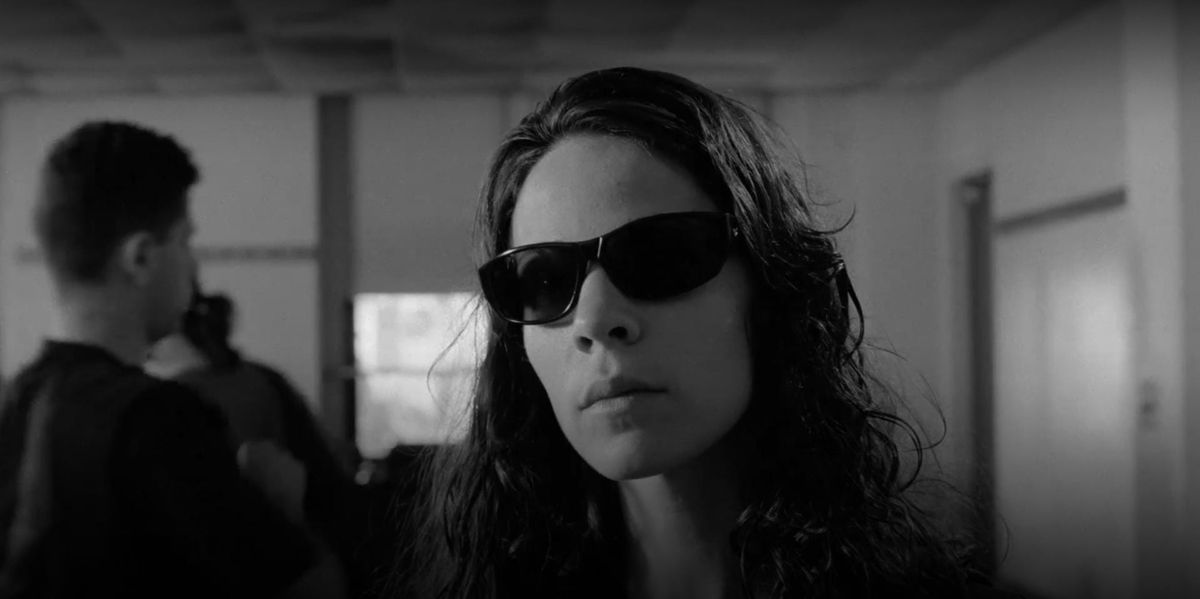
The Addiction opens with footage of American war crimes in Vietnam. Well, no, that’s not true: It opens with credits and a truly awful R&B song by someone you’ve never heard of, which leaves you entirely unprepared for the footage of American war crimes in Vietnam, which immediately follows. While you’re still getting your balance, and recovering from the sight of dead children, our heroine — a philosophy grad student, Kathleen (played by my close personal friend and spiritual mentor Lili Taylor) — dives straight into the question of Americans’ collective responsibility for the atrocities committed in our name.
Prosecuting individual American military officers, or Nazis, or what-have-you, Kathleen argues, is something we do only because “you can’t jail a whole country.” The individual decision to murder children arises from the child-murdering will of the nation, or at least its government: “If you’re going to prosecute war crimes, you better make sure that more than one man takes the blame for everything.”
Thus begins The Addiction: A movie in which vampirism is only an advanced symptom of humanity’s innate cruelty and depravity, where a pretty lady biting you on the neck is a lot less scary than knowing you belong to the species that perpetuated the Holocaust. It is a hard, dark, unforgiving movie with no fluffy, romantic Anne Rice bullshit whatsoever, and this is its power. Its vampires aren’t tragic or misunderstood or sexy. They’re monsters, and reflections of the monstrousness within us all.
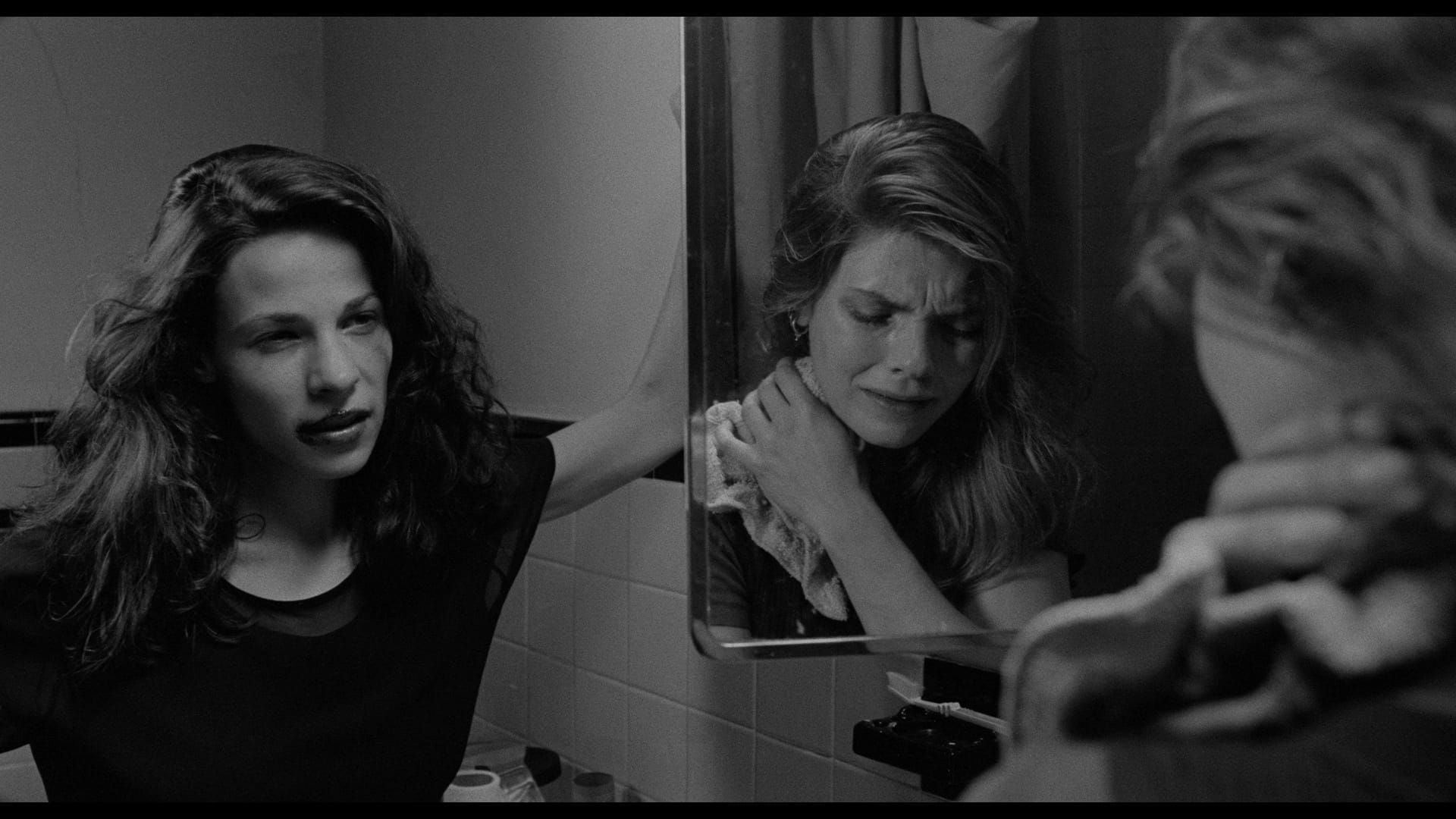
The bite that turns Kathleen into a vampire — it occurs only a few minutes into the movie — has no quality of seduction to it. It’s just a stranger bashing your head into a metal railing and dragging you into an alleyway to assault you. Ferrarra directed the best and most humane of the 1970s rape-revenge movies, Ms. 45, and he knows exactly what he’s shooting here; Taylor recovering from her “vampire bite” is shot very much like Zoe Lund recovering from her rape in Ms. 45. The scenes of Taylor weeping and peeling sticky bandages away from her neck to inspect the damage are hard to watch.
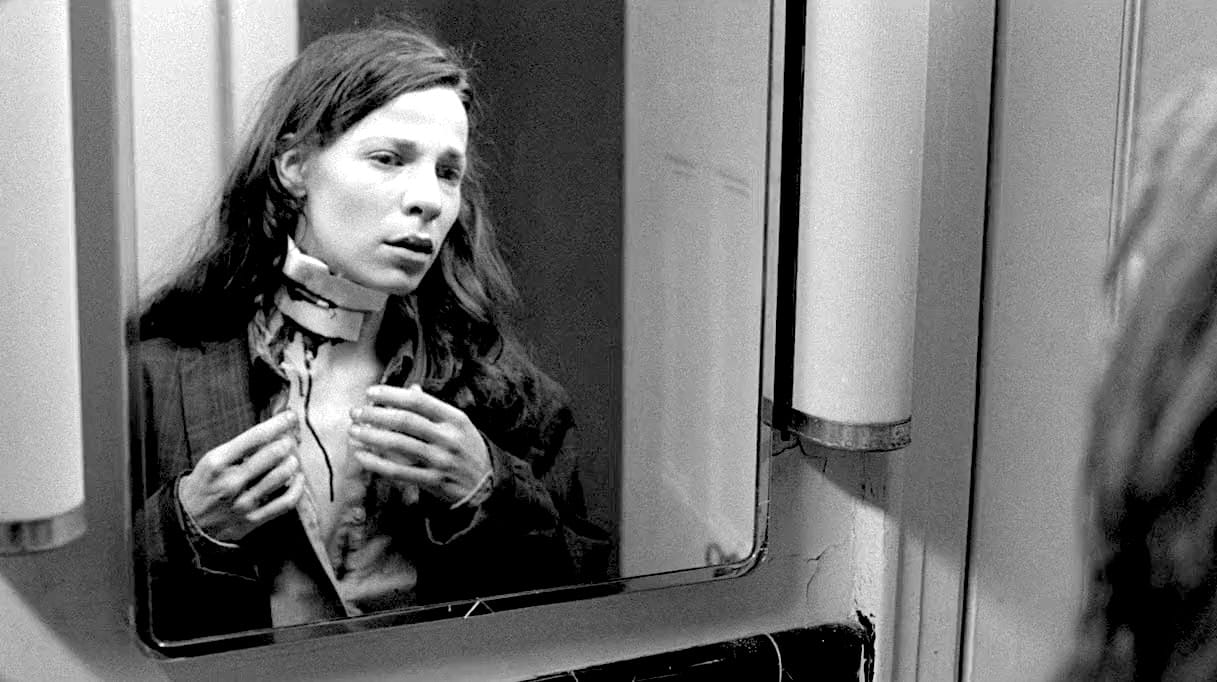
They’re not as hard to watch as what comes next. “Look at me and tell me to go away. Don’t ask. Tell me,” the vampire tells Kathleen, before sinking her teeth in, and Kathleen soon begins repeating the same line to her own victims. None of them ever tells her to go away hard enough, though all of them try to do so. She blames each one, therefore, for “letting” them assault her; she’s a vampire, she can only hurt you if you let her in.
In Ms. 45, Zoe Lund wages war on her rapists, but in The Addiction, Kathleen becomes one. Before long, she’s in an apartment with a weeping young woman who’s peeling bandages away from her neck, laughing and blaming her for what happened: “What the hell were you thinking? Why didn’t you just tell me to go?”
“I was afraid you’d hurt me,” the young woman tells her. Kathleen only smiles: “Worse than I’ve done?” she asks.
There is no refuge, no higher moral ground you can claim because you were once a victim; human beings victimize each other. It's what we do. It's what we are. If you’re not biting people in alleyways, Kathleen reminds us, you’re “paying taxes to turn Central America into a mud puddle,” and for once, that point doesn’t feel like relativism. It feels like clarity, like acknowledgment that we are all neck-deep in carnage we’ve trained ourselves not to see.
Kathleen can hurt people without feeling bad about it, but so can everyone else, if the pain occurs far enough away, or to the right people, or under the right conditions: “My indifference is not the concern here,” Kathleen tells that young woman. “It’s your astonishment that needs studying.”
It’s no mistake that most of Kathleen’s victims are Black men, or young women like herself. She’s picking out the people whose suffering we’re most likely to overlook and excuse. The horror of the vampire is not just that you have to let them in, that some part of you wants the attacker; it’s that some part of you is the attacker, that you too are capable of hurting others for your own selfish gratification, and that’s a fear The Addiction explores as clearly and horribly as any vampire movie has ever done.
There is no sensuality in the scenes of the vampires feeding, no Anne-Rice-ish insistence that vampirism is secretly just a fun kink or some sexy rock star cult where you get to be queer and cute forever; these are lost, bad people fulfilling an ugly and degrading compulsion. The blood provides no pleasure, and no power, just temporary relief from withdrawal.
If this is addiction, it’s late-stage, when you can no longer get high off the substance in question and just need it to maintain equilibrium: “We drink to escape the fact we’re alcoholics,” Kathleen tells us. “Existence is the search for relief from our habit, and our habit is the only relief we can find.” The substance they are addicted to isn’t blood; it’s evil, and humanity has never yet found a way to cut itself off from the supply.
What keeps The Addiction from being a perfect movie, in my view, is its ending — which is too soft, and too sudden, for the movie that precedes it. That ending makes total sense, if you understand where the themes of the movie have been heading, but it’s still disappointing as a conclusion to what’s come before.
Which is to say: Vampires are deeply, unavoidably Catholic monsters, and The Addiction goes all-in on its Catholicism. All human beings are inherently evil — fallen, marked with Original Sin — and our own will, when followed, can lead us only to Hell. Only submitting to the greater will of God can make us a little bit less evil than we naturally are.
Happiness does not lie in satisfying the self, but in annihilating the self and subsuming it to God. Suffering, particularly the suffering of guilt, is a good thing — it forces us to realize the evil we’ve done, and thus to atone for it. “We should all hope to feel guilty, to feel pain, so we can seek pardon and ultimately freedom,” one character says, spelling it out.
On some level, I respect this. If you’re going to play around with Catholic themes, you can’t half-ass it, and this is, indeed, what I was raised to believe. However, that does not mean that the movie’s ending — in which Kathleen literally converts to Catholicism, and then literally dies and is reborn through the love of Christ, all within the last five minutes — works on a narrative level.
Maybe it’s that the particular promise of Catholicism — that guilt alone is enough, that confession always brings forgiveness and absolution — no longer rings true to me. We don’t need to be forgiven by God, we need to be forgiven by the people we’ve hurt, and sometimes, that forgiveness is impossible. Pretending you’ve received total absolution from a supernatural entity, when you haven’t worked to earn it from the other human beings in your life, seems morally bankrupt to me, which is one reason I’m not Catholic any longer.
More than that, though: Even if you believe that Christ can forgive anyone, they have to seek that forgiveness, and it doesn’t ultimately make sense to me that Kathleen would seek to be redeemed. It seems more true to her character, and more in keeping with the rest of the movie, to let her self-immolate or drown in all the sin she’s created. The Addiction is a hard, dark, unsparing movie, but in the end, it flinches, and that keeps it from being as great as it deserves.
If true evil exists, then it follows that true goodness also exists, and it’s tempting to believe that anyone, faced with the option of goodness, would choose it. But not everyone does. That’s always been the point here. Some people see evil, and choose evil, regardless of what it does to them or anyone around them. Some go down into the darkness, never to return.
The Addiction is streaming on the Criterion Channel (justly!) and Plex (for free!). Uh-oh, here comes that song again.