The Rat
On war and what we have to choke down.
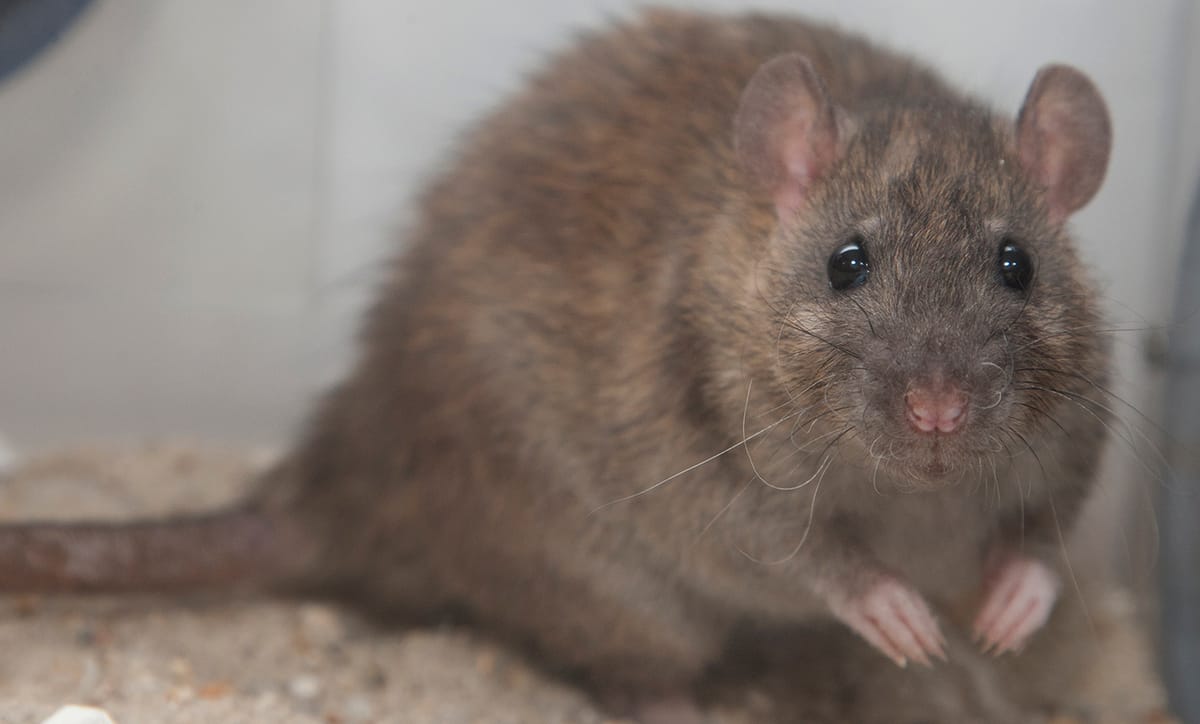
This is an old story, and often repeated, but I haven’t told it to you before: The one about how my great-great-(great?)-grandfather ate the rats.
He fought in the Civil War, for the Union (thank God) and he was too young to enlist — fourteen years old, is what I heard — but he lied about his age, and someone let him lie. He didn’t look any older than fourteen. I know this, because he only served for a couple of weeks before he got captured, and his age was the first thing his captor pointed out.
Here’s how I heard it: The Confederate soldier who captured my great-great-(great???)-grandfather gave him one look and said, “you’re not old enough to be here, are you?” My great-great-something-grandfather said he was. The soldier explained that my something-grandfather was now a prisoner of war, and would be transported to a prison camp, and that this camp was not a place any child should be.
“I’m going to turn around and close my eyes,” the enemy soldier said. “If you’re not here by the time I turn back around, I’ll understand.”
When he turned back around, my several-times-great grandfather was still there.
In the prison camp, where he remained for the rest of the Civil War, my several-times-great-grandfather ate rats to keep from starving. I don’t know what else he experienced, or what other forms of suffering or degradation he encountered. I know about the rats, because after his release — he went home; he married; he had a long and more or less peaceful life — he would speak up, at every single gathering where food was present, to tell the rat story.
The fancier the dinner, the more sumptuous the meal, the more powerless he was to resist. The plates would hit the table, and there he’d be: Squatting in the filth, catching vermin with bare hands, biting their throats out or breaking their necks and feeling live, still-twitching, still-furry rat go down his throat and into his stomach, where it kept him alive long enough to survive and tell this story once again, for the 4,007th time, right in the middle of little Jedediah’s first communion luncheon.
People stopped inviting him places. The family stopped throwing parties. His wife and children begged him to stop with the rat thing. He didn’t stop. People didn’t understand PTSD, back then; they didn’t understand that food was probably some kind of trigger. They just knew that my grandfather felt duty-bound to tell the single most disgusting story anyone had ever heard while they were eating.
This story has traditionally been conveyed to me as a warning about stubbornness, or about bringing up unpleasant topics; I am often guilty of both. Yet no matter how brave or how stubborn he is, a fourteen-year-old boy is not capable of imagining the inside of a prison camp, or the things he will be required to do to survive in there. He cannot predict what it will be like to be traumatized by food — the thing he needs to survive — for the rest of his life. The story never begins with the rat. It begins with the warning. I wonder how many times he thought about it, while he was locked up. How many times did he wish he’d just run away?
I have two living relatives who’ve been in prison. One, an aunt’s ex-husband, shot his girlfriend in the head in the middle of a police station. I do not pity him. The other, a distant cousin, was another soldier.
This one was also a teenage boy when he enlisted; say eighteen or so. This branch of the family were farmers and public-school teachers, and they had a lot of children, so my cousin did what many kids in his position do — enlisted to get the free college tuition after his service ended. In a time of relative peace, this might seem like the common-sense decision, and it did when he signed up, which was the spring of 2001.
Well. One morning, my cousin wakes up and America is at war, and he’s going to be fighting. He knew that this could happen in theory, but to say that an eighteen-year-old knows something in theory is the same as saying he doesn’t know it. My cousin wakes up, and war is real, and he’s going to be in one, soon, and all of a sudden, with breathtaking clarity, my cousin realizes that he doesn't want to die.
He ran. To be more specific, he stole an Army jeep and fled the base, only to be intercepted for desertion, and also grand theft auto, because if you are going to run away from the United States Army, you really should not do it while driving a U.S. Army vehicle down a public road.
But then, that’s the point; he wasn’t thinking about how to avoid capture. He wasn’t thinking. This isn’t a story about a principled anti-war protester, or a criminal mastermind, or even a soldier, because he had never been in battle or killed anyone or even really served. This is a boy who was in high school three months ago having a panic attack. I don’t think he even realized he was committing a crime until the police caught up.
He went away for it. Just setting foot on an army base was enough for the military to say they owned him, and could do what they wanted with him, and so, he wound up in the same place it as my something-grandfather: In prison. That’s the other thing about all of this. By the time you realize the danger you’re in, you may have lost your last chance at running.
These two stories have been ricocheting around in my head for years now. Every time the news gets particularly bad, I open this essay; then I spend a week or two staring at those two stories, trying to figure out what any of it means, or whether my opinion on it matters, and I close the document one more time.
Both men did the “right” thing from the perspective of history. It’s widely acknowledged, nowadays, that the Civil War was necessary, and the wars on Iraq and Afghanistan were unnecessary. We can say that it was righteous to serve in one, and righteous to refuse the other. But neither boy was operating on righteousness, nor did they have the judgment of history to guide them; their motivations, like adolescent bravado or blind panic, were only human. Both men, despite making the “right” decision, wound up being punished. Both wound up in cells.
In the stories we tell about war, it adheres to narrative logic; good is rewarded and evil is punished, and “good” and “evil” are clearly identifiable and consistent and distinct. The Rebels vs. the Empire, Harry Potter vs. Voldemort, Frodo and Gandalf vs. the Orcs and the Eye of Sauron: Our Side is always made of righteous heroes, and Their Side is always filled with monsters, and at the end of the day, the monsters never win.
These two stories, about the rat and the stolen Jeep, stay with me because they say otherwise. In these stories, war is not logical, or righteous, and it has nothing to do with justice; war is just a horror that sweeps into people’s lives and upends them, and no matter what you do, right or wrong, good or bad, war leaves you shattered.
War — I hate to say this; I think I might be the first writer to ever say it — is bad. I think you should avoid war, if possible. Controversial, I know!
You don’t always get to avoid it. I think we’re all about to eat the rat now. We wasted our last chance to run away, through bravado or stubbornness or just not knowing what we were getting into, and now there’s only the place we’re stuck in, and the question of whether we will survive here. I think that whatever we do next is going to haunt us. That even if we get through it, we’ll still taste the blood and feel the twitch of what we choked down.
Before we get any further, I suppose I should clarify my own ethical commitments, around the use of force. I've hesitated to do this openly, because it might come across as pretentious, or preachy, and frankly, I don't want to put my most personal convictions out on the Internet for people to pick at and dismiss. But they're different than those of many people on the left, and I get in trouble when I try to talk to those people without defining everyone’s respective codes.
In essence: I follow an (ugh, I know, I'm sorry) religious code of ethics, and one rule is that you do not kill, and you also do not permit or encourage others to kill. You can’t just “forget” to feed your goldfish for a month and claim you didn’t kill your goldfish; you can’t pay a hit man and claim it’s okay because you never pulled the trigger; you can’t be Chaya Raichik and act surprised when somebody bombs the hospital you just doxed. Different people interpret this rule in different ways, but in the interpretations I’m familiar with, a commitment to opposing war, capital punishment, and the use of lethal police force are all pretty standard, because all of those are instances of the state killing in your name.
This doesn’t mean that I think I’m enlightened or special or morally superior; if I were, I wouldn’t need a code to help me make decisions. I am not an expert or an especially skilled practitioner of this belief system; I live in violation of this precept, and most precepts, at least some of the time. For instance: “Do not kill” is overwhelmingly interpreted to require a vegetarian diet, but I still eat meat, because I’m anemic and I get really sick whenever I go without animal protein. (“You could substitute it with --” I know. I substituted it with that. I got sick.) So living creatures still die in order for me to live, and when the meat is factory farmed, they endure horrifying and torturous conditions. I do not get to stand above the pain of the world and judge it from on high. I cause death, too.
The ban on taking human life is something I feel I can and should commit to. One limit on it — and this is the part that pisses a lot of people off — is that it has to be unconditional. You can’t oppose certain wars, or certain militaries, while backing others. I can’t support the US or Israel when they invade Iran, but I also can’t support the idea of an armed leftist revolution. I can’t encourage people to kill random trans kids or healthcare providers (again, see: Chaya Raichik) but I also can’t cheer on Luigi Mangione or the guy who shot Charlie Kirk. All human life — all life — has value, and all of it has to be valued equally, even if it belongs to someone hateful. It seems like an impossible standard to live up to, and it is, and that’s kind of the point.
Precisely because this is a private spiritual commitment, I don’t have the right to force these views on anyone else, and I can’t reasonably expect others to share them. But neither am I free to abandon them when they become socially inconvenient. I have a hard time saying that war is never necessary. If the Civil War was the only pathway to abolishing slavery, then it probably had to happen. If the choice was between Hitler and World War II, then we probably had to fight World War II. I have read Fanon, and Babel, for that matter; I am familiar with the argument that the violence of the colonial state is so overwhelming that meeting it with violence is the only moral course of action; I know that, for some people, that represents a profound commitment, and it motivates them just as deeply as my beliefs motivate me. I try to respect that.
But there is, in my own view, no war that is moral, and no killing that is good. I can’t do it, and I also can’t support it, and that’s where we are.
When possible, I try to focus on shared goals and values: Most of the Fanon fans and Nazi-punchers want the same things I want, for the same reasons. They want a world where everyone’s humanity is seen and valued. They want ICE out of their neighborhoods. They want patriarchy dismantled. They want trans kids to be safe. When I’ve spoken to young activists who believe non-violence is weak or ineffectual — which I have, sometimes, for work — I feel for them the same way I’m supposed to feel for the troops: These are incredibly young people, putting their bodies on the line under circumstances where they may well be maimed or killed, in order to make the world safer for me and my daughter. I have to respect them for that, at least.
Sometimes, though, communications break down. Not long ago, I got on the wrong end of a Bluesky discourse around whether it was categorically necessary to hate American soldiers and believe they are evil, which was (initially) framed as “if they don’t like war, they can just quit.” As you might imagine, my cousin’s experience did not leave me with warm feelings for the US military, but it also taught me that “just quitting” isn’t possible — at least not without consequences very few people are willing to face — and it left me feeling pretty terrible for any other high school students who got groomed and sweet-talked by a recruiter only to realize, too late, what they had actually signed up for.
“They could have just not signed up.” They could have, but they didn’t, and poverty or desperation or their parents’ politics or the endless amount of pro-military messaging in pop culture or just plain ignorance all may have played roles in that — it is really, really often the poverty and desperation, I hate to tell you — but these are teenagers, and I have never yet met a teenager who didn’t do at least one catastrophically stupid thing. A fourteen-year-old cannot realistically imagine the inside of a prison camp. An eighteen-year-old cannot know the terror he will feel when he is actually going to war. Many of the kids who sign up will come to realize that they were wrong, that whatever they were promised isn’t enough — if the promises were even based on reality, which they often aren’t — and that what they are doing is horrible, and by the time they realize that, there is usually no safe way to get out.
In the absence of a safe escape route, these kids can make desperate decisions. The first person I ever knew to commit suicide, a friend of an ex-boyfriend, served one tour in Iraq without complaining. When he got word that he was being sent back, he drove out to a parking lot, sat on the hood of his car, and shot himself in the head.
I don’t think the people who were making this argument were thinking about that kid. I don’t think they were imagining Lilly Bushnell, or even Chelsea Manning. I don’t think Manning necessarily shares all my beliefs either — she dunked on me on Twitter once, which is an experience she shares with most of the adult population — but you’d have to be a fool to look at what she did, and the price she paid, and say that it was easy. I feel about her the same way I feel about the kids getting blinded by ICE agents: When somebody is willing to suffer like that, for the sake of building a more just world, you have to at least respect the integrity and courage behind that decision. Be a hero seems like a more winning message than you’re a dumb piece of shit and I don’t care if you go to jail.
Well: Somehow or other, this got construed as a statement of unconditional support for the U.S. military, and then I was a Nazi, doing fascist propaganda for the war machine, and bringing up the role of economic coercion or the fact that military recruiters are specifically operating under instructions to target poor and marginalized high school students, visiting their schools up to 10 times more often than schools in wealthy neighborhoods, was for some reason particularly unacceptable, and it was just a mess.
All the people involved probably could have found common ground, on a different day. I don’t think “the US military is a predatory organization that will lie to your children so it can drink their blood” or “the rich send you to fight their wars because they don’t care if you die” or “you are being sent to fight a war that serves no-one’s interests except that of a select few politicians who will never be in danger” are pro-military or pro-war sentiments. I don’t think Creedence Clearwater Revival or Kate Bush are Nazi propagandists, and neither do you. In fact, I think these are the sentiments that have traditionally been most effective in mobilizing anti-war sentiment in the US, and in generating empathy and solidarity with the people being bombed: This sign exists for a reason.
But that’s not a conversation you can have on the brink of nuclear warfare, with a school full of little girls killed, when everyone is scared and angry and powerless and looking for a place to put those feelings so they don’t break down. Maybe a few of the people in the discussion had fantasies about an armed uprising that involved taking on the U.S. military, and needed to pre-emptively dehumanize soldiers to feel better about killing them — you do run into that, these days — but for the most part, people were operating out of fear, and grief, and loyalty to their families and their friends and their dead, just like I was.
So I walked away. The same rules that say “don’t kill” also forbid harmful speech — i.e., not yelling at people and calling them names and making them feel bad, i.e., not fighting with people on the Internet — and there was nothing compassionate about staying in a discussion that was just driving everybody up the wall.
Don’t kill your enemies is the rule, but what it means is don’t have enemies; don’t see other people as obstacles to be overcome or threats to be eliminated or tools to be utilized, but try to remember that each person you meet is just you, with a different outfit and a different set of circumstances, and that they’re making the same decisions you would, if you had lived their life up to this point. They might not all be good decisions, but yours aren’t either. See past the decision to the person beneath it. Offer grace.
I’m not there yet. There are people on this planet I may never be able to forgive, or understand, or have compassion for; there are people who seem genuinely committed to doing harm, and who take pleasure in other people’s pain, and I can’t help thinking of them as evil. I cannot command you to have compassion for any specific person or set of people, either, not even my own manifestly charming self — when the hurt runs deep enough, it’s just not possible, and it’s cruel to shame anybody for that pain.
Still: I try to widen the circle of my compassion, when I can manage it. In the build-up to war, the circle contracts; compassion is suddenly a weakness, or a sin, or a betrayal, because it’s a refusal to take aim at the culturally agreed-upon monster. One day trans people are just a rare phenomenon you’ve heard about on TV, and the next day they’re a dangerous craze seducing your daughter. One day Muslims are just your doctor or your insurance agent or the guy in the apartment above yours, and the next you’re looking at a magazine cover reading WHY THEY HATE US and they’re the ever-present Threat From Within. One day we're all free to make decisions based on our codes and values and ethics. The next day, you're either with us or against us. You know the drill.
I was on the phone with my boyfriend, the day 9/11 happened, saying I’m so scared we’re going to go to war, I’m so scared people will keep dying. He said, but anyone who could do something like this just isn’t human. They were human. That was the point. We were about to do “something like this,” over and over, and we were human. We just found some way to tell ourselves it was different coming from our side. We found some way to say it didn’t matter, or that more lives would be saved than lost, or that they’d do it to us if they got the chance, or that they weren’t actually human, and so it was the right thing.
That’s why the ban on killing has to be universal: Because it’s actually really easy to avoid murdering your friends and colleagues and the people you like and care about, but when it comes to killing your enemies, your mind will always find some excuse. It is a quick and easy slide from you did something horrible to you’re not a real person to the world would be better without you in it. And then you eat the rat. You take a life to keep your life, and for the rest of your life, at every meal, you feel it: The choking, the squirming, the blood filling up your mouth.
Human beings are not made to kill each other. Doing it breaks us, even if we’re sure we are doing the right thing. In The Wretched of the Earth, Fanon tells the story of a resistance fighter who bombed a cafe known to be patronized by fascist leadership. For the rest of his life, he was plagued with obsessive guilt: How many people, he asked, over and over, how many innocent people were also in that cafe?
That fighter is not the exception. Despite all the conditioning that goes into training soldiers to dehumanize their targets, nearly every one of them instinctively regrets hurting people: A paper on moral injury among soldiers says that “only 2% to 3% of all soldiers are capable of aggression without subsequent remorse, namely, the percentage of sociopaths that can be found in any male population.”
The rest of that paper goes on to explain the work those soldiers do to deny and suppress their guilt so they can keep killing. They compartmentalize. They rationalize. They justify themselves with stories about the imminent threat posed by the enemy. They develop the idea that they are literally different people “over there” than they are “at home,” or that different rules apply; for instance, bombing schoolchildren over there is the cost of doing business, whereas walking into an elementary school and opening fire at home would make you a monster.
Above all, they deny any uncertainty, any complication, any ambiguity that would allow them to question the righteousness of their actions: “Soldiers are taught to interpret situations such that they become uncomplicated and always soluble, while at the same time, they will have to deny that the very reason they adopt such an interpretation is because military situations are often complicated and without real solution.”
Not only soldiers. I will say that.
Going to war means giving away your humanity — a fact which is horrifying only because everyone has humanity to lose. It means lying to yourself, over and over, about something you cannot not know was wrong, and getting further away from yourself every time you do it. Every form of violence you inflict on another human being is an act of violence against yourself, and it can, over time, be lethal. Veterans are nearly twice as likely to die by suicide as civilians, and that number is rising. I have seen it rise.
“The thing that makes me a danger to myself,” Elisa Rae Shupe said in our last interview, “is the military background. You have to understand that. When I get involved with something, I’m willing to die for the cause.”
Two years later, I saw a story about an unidentified “person” who had hanged themselves off the roof of the parking garage at my local VA hospital while draped in a trans flag. A few days later, that person’s name was published, and I knew it was her.
I go back to that moment, in that interview, over and over. She told me she was a danger to herself. She said she was trying to die. I did not hear it. She said the word “soldier” so many times, told me she was a soldier nearly every time she had to explain her own actions; I didn’t understand what it meant, and I asked her to explain what it meant to her, but it was only her death that finally, fully explained it.
I don’t think Elisa Rae Shupe was ever an evil person — even though she was a soldier at the height of the War on Terror, and even though, after leaving the military, she spent several years working for the TERFs. I think she was who she said she was: A soldier. I think she had so fully internalized what we tell our kids about war and sacrifice and righteous combat that she felt her only real role in life was to sacrifice herself at the behest of more powerful people who did not give a shit about her; deep in her bones, she felt that her only human value was as a corpse thrown at the feet of someone else’s cause.
She tried to sacrifice herself for the military. She tried to sacrifice herself for the TERFs, who drove her into active suicidal depression by detransitioning her and parading her around as a “cured” transsexual. She tried to sacrifice herself for other trans people, by leaking all the TERFs’ emails and putting herself in the crosshairs. When that died down, America re-elected Trump, and Trump issued a ban on trans military service, and Elisa, who could not describe herself without saying soldier-soldier-soldier, wrapped herself in a trans flag and issued a statement to the media — blaming her death on America, the US military, and Trump, in more or less that order — and she jumped off the roof, and then she was dead.
No-one covered the statement. They couldn’t; journalists are warned not to share suicide notes with the public, because it inspires copycats. The initial report of her death didn’t even have her name on it. Elisa’s friends posted the note on the Internet, and that’s the only reason I found out she had died. Her life ended in one more big, public sacrifice, and it changed nothing, because the story ran in one local paper and was gone in a week and did nothing to shift US policy even a little. She lived like a soldier, and she died like a soldier: For nothing. For nothing at all.
War is bad. That’s my story, and I’m sticking to it. War is bad, and the thing in you that wants war is bad; the thing in you that looks for an enemy, that wants power at any cost, that erases the humanity from people who oppose you, the thing in you that needs to strip away the ambiguity and jettison the nuance and make complicated things simple, because otherwise, you couldn’t be the good guy, and there is always one Good Guy and one Bad Guy, and Good Guys always win.
If you follow that road long enough, it leads to death — your death, or someone else’s death, or maybe everyone’s death, given the number of nuclear warheads that seem to be lying around. I do not know how to steer people away from that except by saying that everyone who stands to die is human, and that causing the deaths of human beings — including your own death, if that should happen — is wrong.
I keep opening and closing this document — I have for two years — because it doesn’t have an ending. It doesn’t wrap up cleanly, or have a moral, or give the reader a solution. It doesn’t do anything but record damage. That’s what war is: Damage. War is not a story. War is something that sweeps into stories and upends them, or ends them, and there will be no point and no justice and no moral by the time it's over. There will only be people who are broken and people who are gone. This has never been a story about the rat. It’s a story about the warning. Here it is now: Run. Run while you still can.
This links to a collection of resources – and a safe, confidential legal support network – to help military members of conscience resist unjust orders or get out safely. It's hosted by About Face: Veterans Against the War.
The death toll currently stands at 1,332 people in Iran, including at least 181 children, and four US service members. It will rise.