The Hunger Artist
On starving yourself to keep the world fed, and other problems.
Dead Teenagers #3 will be out on May 20. You can catch up by getting Dead Teenagers #1 and #2 from your comic shop or the usual digital retailers.
In the meantime, DILF: Did I Leave Feminism is still available, in both book and smell form. You can also pre-order Be Not Afraid, which will be out in collected edition in July.
Then, on July 8, the world will see the birth of Clayface: Celebrity Dirt.
This post contains fairly detailed descriptions of disordered eating. If that's going to be a trigger for you, please do steer clear.
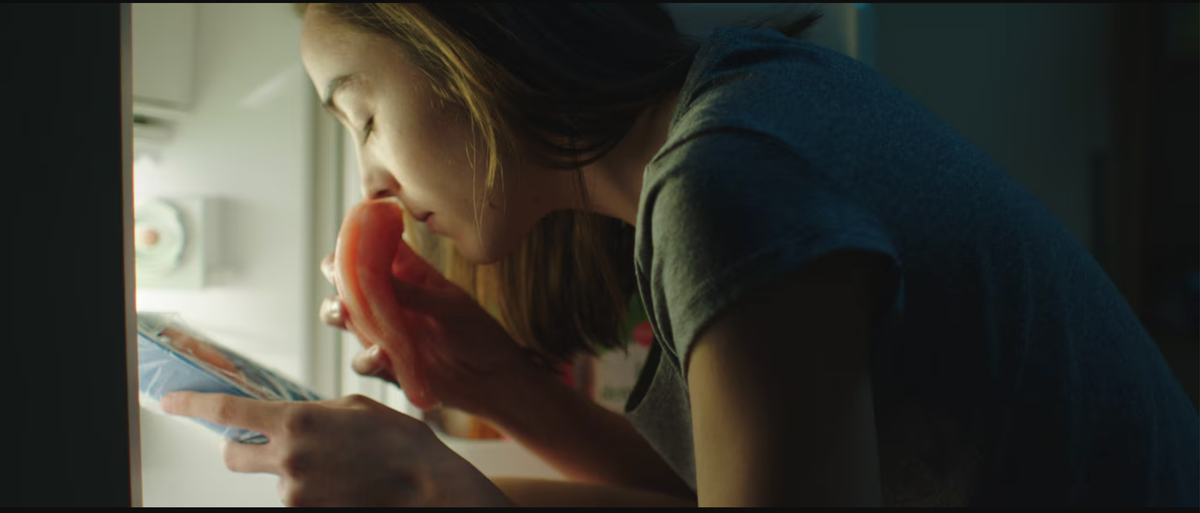
Back in the summer of 2012, I took a principled ethical stance. I stopped eating.
I’ve told the story of my 2012 hospitalization several times now. I’ve said that I was in rough shape, psychologically speaking, and some people know that I lost an alarming amount of weight beforehand. I don’t think I’ve ever been clear on what exactly I was thinking.
The long and short of it is that I am not a good cook, and one of my boyfriends used to complain about how he always had to cook our meals. I was having a post-break-up fight with this boyfriend — our last fight, because we stopped speaking to each other — and when it ended, I was angry at myself for not being able to salvage the friendship, and I couldn’t get it out of my mind: The eating thing. How other people made food and I ate it, how I was making other people do work for me, how that was wrong.
Eating began to feel awful. Guilty. It was almost my birthday, so people were taking me out for meals; I would go to my favorite restaurant, and order my favorite food, and when I put it in my mouth, it tasted like licking an ashtray. I got sick to my stomach. I pushed the plate away.
The sin of it, making the restaurant workers labor away for food I couldn’t even finish, amplified in my mind, until it was connected to every injustice on Earth. Eating was cruel to the animals who were slaughtered for my consumption. Eating was cruel to the immigrants who were paid too little and worked too much and exploited in every cheap takeout joint in town. Eating was cruel to the planet, the forests burned down to make room for crops, the carbon emissions of the planes flying across the planet to my supermarket. I was a drain, a mouth, sucking down the world’s blood, and it tasted like blood. I couldn’t swallow.
I hesitate to call this an eating disorder, because it wasn’t about weight. I didn’t even notice my weight, although, by the time I was hospitalized, it was far below anything you could call healthy. It was about not wanting to be a burden on anybody. It was about wanting to not have needs, so that my needs wouldn’t be inconvenient to the people around me.
It was also about the Internet, though, because I was spending a lot of time on Tumblr when this happened, and because — please know I say this with love — early 2010s feminist Tumblr was absolutely the kind of environment where you could catch the idea that eating food gave you Not Starving To Death Privilege. It was an atmosphere of constant, furious call-out and self-critique, constant vigilance against moral contamination. Everyone was Bad, and they ought to be Good, and the only way out was to recognize how Bad you were and publicly flagellate yourself over it, or — easier, more rewarding — to catch someone else being Bad, and publicly list all the ways that they had fucked up, thereby pushing yourself one or two rungs up the ladder by proving that, no matter how Bad you were, somebody else was Worse.
This was done by perfectly good people. It was done for perfectly good reasons. It was just unsustainable. It damaged people. It made them sick. It is not new to say that, for millennials, politics has come to play the role traditionally occupied by religion. It gives you an identity and a community — a group of people who share your values, and are engaged in the same struggle to live by them — and a structure of belief, a way to tell right from wrong and make decisions accordingly. These are basic human needs, and it is not wrong to try to fulfill them. But churches, Bataille once wrote, are defined as much by who they exclude as by who attends them; in order to have believers, you need unbelievers, and in order to have the righteous, you need sinners.
At its best, feminist community was like nothing I’d ever known; a place where I just fit, where people accepted and even valued me, without my having to hide or deny or apologize for myself. At its worst, it resembled the sort of Christian youth groups I’d learned to fear as a teenager — where Sin was ever-present, and someone was always being Righteous at someone else’s expense, and where it would not be at all uncommon to hear (as some of my friends did) that, you know, you wouldn’t have been raped if you weren’t engaged in the Sin of Premarital Sex or the Sin of Drinking or the Sin of Going To Parties Where There Were Rapists Present, so maybe Jesus was trying to teach you something.
I stopped eating because I wanted to become someone that nobody could call out; someone impermeable to contamination. Being sinless meant acceptance, it meant safety. If it also meant starving, then so be it. Being cast out felt scarier than self-annihilation.
This particular zeitgeist has passed, and no-one really remembers it fondly. It ultimately gave rise to the very thing it was trying to stamp out: The Red Scares and Cum Towns and Bruenigs, the “leftists” who took great pleasure in saying slurs and making rape jokes and being as vile and abusive and callous as they could possibly be (and who veered to the right pretty much the moment anyone questioned this) were reacting to that Tumblry mode of engagement as much as anything else.
Those people are all, more or less, monsters; even if 2010s purity culture was bad, replacing a bad thing with a worse thing does not make life better. But I am trying to eat, these days. I am trying to resist my own craving for martyrdom or sainthood. Yet I still still try to serve social justice, and every now and then, the virtue trap opens and swallows me. I still put myself last on my own list of things to save.
I asked to step down from my regular magazine gig a while back. It wasn’t about not wanting the job — I loved the job, and I’m still going to pitch on occasion. It was a math problem: Every month, I had too much work to fit into my schedule, and every month, one job in particular paid less money than everything else, while also taking more time to complete.
The problem was that the one job I could not afford was also the job most directly associated with virtue, and with politics: It was advocacy journalism, queer and trans journalism, for a queer magazine. This was my chance to Serve the Community, to Prove my Value, to Bear Witness. It was my one, rare chance to be a trans person who was actually heard, who could participate in shaping media coverage of my community. We were being systematically excluded from newsrooms, and I knew that. Opportunities to work at all were rare, and I did not want to take this one for granted.
So I kept doing the column — but I also kept taking the other work. I sold a comic book and another, simultaneous comic book and a third, simultaneous non-fiction book and then a fourth comic book, and I wrote all of them while also writing a weekly newsletter and reporting a monthly magazine feature and raising a child. Then I hit October of 2025, and the book was going to be a week late from the printers, and someone had forgotten to book the theater for the launch event, and someone else wasn’t happy with how their interview turned out, and one of the comics was going on hiatus for an undetermined period of time because a team member had a family emergency, and at that point, I just fucking collapsed.
I was sick in at least three different ways. I had shingles, which is what happens when the chicken pox virus re-activates within your system and — I’m paraphrasing here — sets your fucking nerves on fire. It is triggered by stress. The cough that lasted for a month and a half was stress. The fact that my entire body was breaking out in creative configurations of hives was stress. The fact that I was so tired that it took me thirty concentrated minutes of effort to get out of bed in the morning: Also probably stress, it turns out.
I am from a lower-middle-to-working-class background that says no-one ever gets paid to write — definitely not people like you — and that if anyone is ever foolish enough to offer you money for a piece of writing, which is Not Real Work and is Honestly Just a Hobby and which you’d Probably Do For Free, you latch on to that and you work harder than anyone else until they fire you. Turning down work is ungrateful, and you’re not ungrateful, right? You can’t afford to be, because the fact is, you don’t deserve a job like this and they should never have let you through the door and it is your job to work so hard that nobody ever finds that out.
I would love to tell you that attitude is unfounded, but it really isn't. The truth is that successful people in this industry often come from a different background than I do; they have parents who can put them through private school and pay for Brooklyn apartments and support them through unpaid internships and introduce them to editors at the magazines and publishing houses where they themselves once worked. I do not have those things. I have the ability to work harder. So I work.
PICTURED: My internal monologue since 2008. Seems healthy???
But I had worked to actual, physical capacity, and I still wasn't able to fit everything in. My body was screaming at me. People were also screaming at me, which isn’t the end of the world — I have, believe it or not, internalized the reality that part of my job is customer service, and that when you write about important topics, people will have strong opinions — but I couldn’t convey sentiments like I can’t have this conversation because I can barely form words or can we please postpone this until I am not actively dying of leprosy or just I am working really, really hard, I’m sorry that you’re unhappy, but I assure you, I am working as hard as physically possible without being unprofessional.
Thirteen years had passed since I had decided to stop eating to save the planet, and I was still setting myself on fire. Still trying to sacrifice, and serve, and be perfect, so that nobody could yell at me — even though no amount of service will ever bring protection, even though yelling is just what people do. Needing to work harder than anyone else while asking for less than anyone else felt virtuous, radical, right, professional — but it is not, in the end, that much different than starving. The politics had changed, the community had changed, but I hadn’t learned.
I am not trying to present myself as a particularly good or saintly person. I can be an asshole, and sometimes, when people criticize me, they’re right. What interests me is the impulse: The belief that one has to work and work and work and work, give and give and give and give, in order to work or to give enough; the tendency to treat wrecking one’s own mental or physical health as a sign of political commitment rather than self-neglect.
Traditionally, one blames all this on hustle culture, or on capitalism, and that’s partly right, but not entirely — plenty of us are railing against capitalism the entire time we do it. The mindset seems to be deeper, and older; some residue of Christian conditioning that has seeped into the wider culture, a fundamental presumption that human beings are inherently wicked and worthless, and that we must suffer in order to be redeemed.
I say us and we here, because this mindset seems to be particularly common among marginalized creators. I have yet to meet even one person who has worked as a Trans Journalist doing Trans Journalism for more a year without burning out. There are good reasons for this: The community has been in constant crisis for (a conservative estimate) the past five years, or (a realistic estimate) the majority of recorded history. This makes it hard for anyone to abandon their post, and harder for them to stay.
As Cord Jefferson famously wrote in “The Racism Beat,” there is just something inherently undignifying about being expected to respond every time people like you are stripped of their dignity. After five years on the Trans Beat, every headline I wrote was either
HED: We’re All Fucked
DEK: It’s Finally Happening, the Cis People Really Fucked Us
Or, sometimes,
HED: We’re Not Fucked Unless [X Thing] Happens
DEK: [X Thing], Which Is Expected To Happen Next Week, Will Fuck Us All
Everything I did had taken on the same cadence: A tone of self-consciously elegiac, studiously noble tragedy, demonstrating marginalized sorrow without losing my temper, dropping in the right activist catchphrases and talking points here and there, never taking a stance that hadn’t been taken before me. It was artificial, increasingly cloying; it was a voice that had nothing to do with me, and everything to do with what I thought would goad recalcitrant cis people into giving a shit, or what I thought trans people on social media would accept from a Representative of our Community.
Here is where I remind you that I have never wanted to be a Representative of any Community — not feminists, not trans people, not (god forbid) women, and not men or non-binary people either. I am and have always been an odd duck, someone with a polarizing style and strong opinions and particular obsessions and my own non-universally-shared sense of humor. I think I can write well, sometimes, and that being a little weird helps, in that it gives me a fresh perspective. However, I am not totally lacking in self-awareness; I’m aware that, at times, even the most generous reader will want to strangle me.
So I have been clear, throughout my career, about not being a Representative for anything or anybody; not being a leader or an organizer or a mouthpiece, being, quite simply, a writer, someone whose worth hopefully lies in having interesting things to say, not in being a democratically elected advocate or sociologically perfect sample of any one marginalized group.
Coming out as trans changed that. The slots for trans people in media are vanishingly few, such that any trans person with a regular byline will be taken for a Representative, whether they want to be or not. As the situation for trans people gets more dire, the responsibilities of Representatives and Advocates become greater. Your job is to go out there, day after day, and make the case for why people like you do not deserve to be exterminated — any flaws in your personality will be attributed to the group as a whole, and thereby used to harm them. There is no room to fuck up in that job. There is no room to be a fuckup, or an oddball, or anything but a mouthpiece for the safest and most widely approved talking points. You can’t be an individual, or a writer, or even a real person; you’ve got to be a good boy and make people feel sorry for you and thereby prove that murdering you would be very sad.
It's not an ideal job for anyone – least of all for a man who can inspire the urge to murder on a mass scale just by tweeting about Taylor Swift. But I did it, because I felt that I had to do it; because my community was in crisis, and you cannot claim membership in a community you are not willing to serve. Writing was my only marketable skill, and as such, I thought it ought to be turned over to the cause.
I set up a dichotomy with Virtue on one side and Authenticity on the other, where Trans People meant everything and I, a trans person, meant nothing, and the result was that I worked myself sick to produce writing that fell far short of my best. Trying to be a perfectly Representative queer in my writing had cut me off from the source of that writing, which was my own non-representative self, and this was inevitable — when you are the one person you never listen to, how can you hear what you have to say?
In the weeks after I stopped trying to sound like All Trans People, I spent a lot of time by myself. I read Proust, because I’ve always loved his books, and no-one has ever paid me to love them. I listened to Liz Phair on the rowing machine in my basement. I wrote tiny, petty, emotional things that had no relevance to the larger world, trying to get each mood down exactly as I felt it; I tried to remember what I sounded like, when I wasn’t trying to sound like anyone but me.
I still want to write for trans people and about trans people. I just want to make sure that it’s me writing it. I was a writer with a platform long before I came out or transitioned – I never had a choice to be openly trans or not, and so I had to learn to be a Representative Trans Person before I ever figured out which specific trans person I was. Transition has a way of remaking everything about your life, shattering everything that isn't solid, and instead of taking time to figure out what I needed during that process, I was figuring out how to keep people on the Internet from getting mad at me.
It's not the best priority. It never is. You cannot starve yourself to keep the world fed: It will only make you tired and embittered and increasingly resentful toward the very people you claim to serve. You cannot represent People until you learn how to be a person, and to do that, you need a life that is, if not actively strange, then at least particular, based on your own desires and needs rather than on someone else's idea of virtue.
I'm not renouncing virtue, or politics, or taking some anti-woke turn: I know by now that I will hold to my principles even when doing so is painful and inconvenient. The problem is my tendency to assume something is right because it's painful and inconvenient — all the times I’ve punished myself, or deprived myself, or hurt myself, because I thought suffering was the same as change.
I've never really talked about the thinking that went into my hospitalization, but I don't think I've ever told the story of what I did in the hospital, either: I answered phones. There was only one phone for the patients to receive personal calls, and it was at the end of a long hallway. It wasn't uncommon for the phone to stop ringing before anyone could reach it. Theoretically, the nurses could have picked it up, but they were busy. Being in the hospital felt bad enough, I figured, and missing your one chance to speak to the outside world could be devastating. So I just sat next to the phone, and when it rang, I took the name of the person on the other end and located the patient they were trying to reach. It passed the time. Fewer people missed calls from their families. Nobody stopped me, so I assumed that I wasn't breaking any rules.
I was supposed to be resting. I got hospitalized for taking my job too seriously, and the first thing I did was create another job which paid me even less. Some people just need to be useful; I have no doubt that the urge to Help will strike me again eventually. I only hope I remember that hunger isn't help.
You cannot fix the world by purging your own imperfections, not least because that approach is completely narcissistic. The great struggle between Saved and Sinner belies the fact that we are all sinners, all imperfect, that we will all be in need of forgiveness many times over, and that it is therefore in our best interest to provide it; the role of the Representative Trans Person belies the fact that there is no representative trans person, that we are not fighting to save an abstraction or an archetype, but the particular, messy, un-workshopped people that we are. I just want to be myself!!! concludes every Inspirational Trans Narrative. I want to learn how to be that person. Slowly, not terribly surely, I am figuring it out.
That's it. You can always subscribe to this newsletter, if you're interested. Otherwise, have a song!