E-Bow the Letter
About a time and a boy and a song.
I knew I would be with my husband before I met him. We were on Tumblr together, in the early 2010s, back when no-one knew how embarrassing it would be to admit you met your spouse on Tumblr. We both had “feminist blogs,” which was the style at the time, and his blog, specifically, was a long self-lacerating joke about being a Feminist Man (TM): It was called The Patriarchy, and he wrote in the voice of The Patriarchy, rating and reviewing various things (albums; TV shows; me, at one point) based on how well they served The Patriarchy’s interests. The Patriarchy gave me a very low rating. I was very proud.
I had never spoken to him — I wrote about St. Vincent, once, and he emailed me a McSweeney’s joke about how all the feminists were into St. Vincent — and I had no idea what he looked like, because The Patriarchy’s avatar was a portrait of Henry VIII. All I knew was the joke, a long, drawn-out, overly conceptual bit about sexism that was perpetually on the verge of falling over sideways and just becoming sexist. I thought it was the best thing I’d ever seen.
This is relevant, because, at the time, I had a boyfriend. We were very serious about each other, and despite this seriousness — or because of it; because we were each trying to force a certainty neither of us felt — the relationship was falling apart. It was agonizing. I was trying with my entire being to save it, and the further away I get from the ordeal, the more I think he was, too. It didn’t matter. It wasn’t salvageable. No matter what we tried, or how hard we tried it, we couldn’t spend thirty consecutive seconds together without somebody hurting someone else’s feelings.
The other guy, my eventual husband, was words on a screen. He was a stranger. But he’d followed me through his personal blog — the one where he wrote in his own voice, about the things he actually liked — and one day, while I was scrolling, I realized: When I finally break up with my boyfriend, I’m going to be with this guy.
It had the force of a certainty, the way some things do: You just know you’re going to get the job if you apply, or you know you’re going to wind up hating this new roommate, or you know it’s time to switch majors, because whatever you’ve been planning for your future, it’s not what you’re actually supposed to do. It wasn’t a hope or a wish, or a fantasy; in the moment, it just made me sad, because it meant the breakup of the other relationship was inevitable. It was just the truth, a transit announcement from the universe: There are no further stops on this relationship. Please exit for your marriage on the westbound platform.
So I did. A month or two after the inevitable breakup, my husband and I had dinner. The next time I saw him, we were planning to move in together and get a dog. We moved in together on something like our third or fourth in-person date, and though we could each cite supposedly pragmatic reasons — he was moving to the city and needed a place to stay; I had inherited an apartment in the breakup and couldn’t afford it — the truth is that it very easily could have been the stupidest decision of both our lives. He could have been a murderer. I could have been a murderer. We could have hated each other.
We just didn’t. We just wound up getting married. But before that started, there was a while — not long; just a couple months, spring turning into summer in 2010 — when we were doing things long distance. He was still just moving to the city, hadn’t really moved yet. We wrote each other letters. We sent each other songs.
"E-Bow the Letter" is a strange song to send to someone you’re dating. It’s not a love song; it’s the text of a letter Michael Stipe sent to River Phoenix, set to music, and the underlying subtext is Phoenix’s death from an accidental overdose at age 23. It’s also a song about fame — big, Hollywood, stadium-tour-filling, next-James-Dean sort of fame — which is an experience that I, like most people, do not share.
What I had, in lieu of fame, was mild notoriety on early-2010s Tumblr. People definitely acted like having an account on Tumblr was the same thing as being famous, which goes a long way toward telling you what was exhausting about the whole endeavor. More specifically, it was an environment in which everyone craved fame with their entire being, while also, simultaneously, loathing anyone who received even a tiny piece of it for themselves.
In the Feminist Community(TM), this took the form of a pretty normal paranoia about radical subcultures being seized and co-opted. Jezebel had proven that feminism could make big money for media companies; however, all the feminist blogs that pre-existed Jezebel were run by “amateurs,” meaning organizers and non-profit workers and academics and other highly trained specialists who weren’t hanging out at the right parties. This was one problem, and the other problem was that feminism was “women’s work,” and as such, no-one thought that it should be paid.
So we had entered a situation in which major media companies were setting up neutered, politically toothless imitations of blogs these women had run for nearly a decade, and if you were very lucky — and “lucky” here meant cis, white, under 30, photogenic, socially connected, and living in a major city — you might get hired to write for the corporate version of your own blog for (I shit you not) $50 a post. That was my starting rate. If you were a true superstar, you might get an offer from a small press to write a book — 99% of the time, it would be an offer from the same small press, because they were the only ones who accepted pitches from feminist writers not named “Gloria Steinem” — and receive a whopping advance of $3,000 to $5,000. I think some people got up to ten. Either way, it was less than the cost of renting a New York City apartment for the time it would take you to write it. You would also never make the advance back, because the second word got out that you had signed a book deal, you would be excommunicated for Profiting Off The Movement, and the people who were supposed to buy your book would, by the date of its release, view you as a strumpet of capitalism who had personally sucked Jeff Bezos’s dick for a share of his filthy lucre.
I’m starting here, with the tensions amongst the feminists, because the truth is, if you ever got in with the Real Writers — the people with less training, and more parties, and all the power to decide who got a career and who did not — it would be worse. It would be so much worse.
My husband was in the orbit of some of these Media Parties, for a while – not because he occupied a position of extraordinary power, or any power, but because he's good at parties. There was one, held every Saturday at a particular guy’s apartment, that got coverage in the New York Times. It mattered to be invited, and he was invited, so he went, and reported back.
“It was just a bunch of guys hanging around, talking about which women they don’t like,” he told me. “You know that woman Doree Shafrir?”
“Yeah?”
“Well, they were saying that she’s a bitch. You know the other woman who did the anthology about sex? Melissa Gira Grant?”
“Yeah, I know her.”
“Well, they think she’s a bitch, too.”
That was life in the heady world of Media — an endless series of rooms occupied by an endless series of dudes who would call you a bitch the second you were out of earshot. At one point, when everybody was taking their turn kicking Emily Gould in the teeth, Super-Important Party Guy, whose legal name is Andrew Krucoff, posted a video of her putting her mouth on a bong and joking about sucking an ex-boyfriend’s dick. She was a woman (which is to say, a bitch) and that was all she could ever be: A girl, who had a boyfriend, who had a dick, that she sucked. That was her function.
The way women survived these circumstances was to have a Media Boyfriend. Half the women I knew were interns and fact-checkers, dating men who worked in vastly more powerful positions at the same outlets — men with bylines and coke habits and long, long lists of other interns and fact-checkers that they’d dated. No-one thought of it as sexual harassment. Everyone wanted to fall in love. Everyone also understood that, if you were a woman, having a Media Boyfriend was the only way the other Media Boys would give you a break — they’d back off on humiliating you, because they might want to use your Media Boyfriend as a contact later, and because there was some small chance that he liked you enough to get offended on your behalf.
I’m dancing around this, acting as if the women could possibly have been equal players in this scenario. They weren’t, and that was by design. If you were a woman in that field, there was immense pressure to be sexually available to men with more power than you, and any woman who did not make herself available on those terms faced intense, public hostility and harassment, in ways that could and did affect her career. It worked the way heterosexuality has worked since Jane Austen: It was fine, it was romantic, it was consensual, and oh, by the way, the men had one hundred percent of the power, and women who didn’t play along wouldn't survive. Engaging with those men, on those terms, was mandatory, because their parties were where all the actual hiring decisions played out — if you didn’t at least socialize with them, no matter how misogynistic or abusive they were, you would not be able to get a job.
We all knew it was happening. No-one wanted to say anything. You didn’t want to be one of those annoying Jezebel feminists, one of those amateurs, who never got invited anywhere because they never truly belonged.
Maybe I’m making a mistake, attributing all this to gender. Gender was a constant irritant, before my transition, a hair shirt I wore under all my clothing, and it was easy to believe it was the source of all my problems. Men did sometimes come in for rough treatment, in those circles: Keith Gessen got a lot of it, though his status as our nation’s pre-eminent Media Boyfriend (and employer of Media Boyfriends!) has buried the memory somewhat. There must have been others, though I struggle to recall any of them by name.
There was this one kid, though, that I really liked — the kid who kept inviting my husband to the Media Parties. He was tiny, shorter than I am, with these big blue eyes, and a sort of unflagging sweetness. He never spoke out of both sides of his mouth, never made a comment behind someone’s back that he wouldn’t make to their face. All of his friends were women, usually older and more established than he was — everybody was older and more established than he was — and as far as I could tell, he never tried sleeping with any of them. He loved Taylor Swift, and was one of the select few people I’ve known who could love Taylor Swift without being annoying; he was so artlessly identified with this young woman, with her struggle to be taken seriously and heard and loved, that even though I thought Taylor Swift’s idea of “love” was corny and cynical and market-researched, I couldn’t help wanting him to have it. He didn’t seem contrived or performative or even naive about it. He just seemed pure.
He talked a lot about being queer, this kid, and not knowing what kind of queer he was, or what name to give it. He talked about being treated badly, treated as a failed man, because he had an open heart and could still treat people kindly or feel an honest emotion. I don’t know if gender ever got involved in his self-labeling; I think not, I think I was just projecting my own story onto his because he used similar words. But it made me feel better, walking into an Important Party and seeing that kid there. It made me feel like I wasn’t alone in the room.
So one day, this kid was talking to my husband, about the Super-Important Party Men, and what he’d gotten up to the last time he’d seen them, and he said this: “They threw their beer on me.” He was smiling when he said it.
Apparently, he’d been up on a roof with the head Party Man, and his select circle of Party Men in Training — this was the Summer of Megadeth crew, the anonymous blog where your name would show up if someone truly hated you — all of whom were older, and more established, and who had bylines and/or jobs in publishing and/or the password to the important anonymous blog where you wrecked the careers of people who got on your bad side. And what these men had done, it transpired, was this: They’d surrounded this kid, this little 20-nothing 90-pound blue-eyed sweetheart who thought life should be more like a Taylor Swift song, and they had taken turns pouring their beers on him and laughing. And he laughed too, because it was a “joke,” and because they were his friends.
They poured beer on you? I was screaming, deep inside my skull, the whole time he told this story. These men who have set themselves up as gatekeepers in your industry; these men who have the ability to either help you up the ladder, if you get on their good side, or wreck your reputation and tank your chances, if you displease them; these men who have power over your future, and who are making you work to earn their “friendship,” and who know full well that you have to hang out with them, have to say you like them, have to laugh at their jokes and go to their parties and pretend to be okay with literally anything they do to you; those guys took turns pouring their beer on you, just to see how you reacted, and that isn’t abuse? That’s not workplace harassment? We all have to sit here and pretend that this was okay?
But he did. We all did. That constant, casual, normalized bullying was the engine the Media world ran on. Like a frat house, like the military, like any functioning patriarchy, the people who were older and more established hailed down abuse on the new recruits — abuse which was, of course, always a “joke,” always something you were expected to laugh along with, unless you were “too sensitive” — until those kids eventually climbed the ladder and started playing “jokes” of their own.
So it wasn’t womanhood, exactly, that was punished. It was vulnerability, or sensitivity, or empathy, or any remaining instinct you might have that said you were revolted by interpersonal cruelty and didn’t want to spend your spare time hanging out with bullies.
Whatever it was, I had too much of it. They didn’t like me, and I didn’t like them, and my name was showing up on the anonymous hate blogs more and more often. I knew the walls were closing in, that being a “public person” was only the first step to public humiliation, and that I could not escape it. Every exchange, every awkward gathering, only got me closer to the moment where every “friend” I had put me up against the wall, with their beers in hand, and threw. And threw. And threw.
Anyway: All the boys and all the girls, sweet-toothed, each and every one a little scary. The feminists were inevitably going to hate me for getting in with the Real Writers; the Real Writers were inevitably going to hate me for being one of the feminists; it was a slow-rolling catastrophe, an inevitable and excruciating humiliation that got closer and more predictable with every supposed “success” I had.
I don’t think I’ve actually said this yet: This is a success story. My writing had gotten a lot more popular than I was comfortable with, a lot faster than I was comfortable with — that’s the only reason this happened. I had wanted to be a writer, but my heroes, as writers, had always been recluses: Proust, Dickinson, Shirley Jackson. Michael Stipe, who — before becoming one of the world’s most famous people — did not speak to anyone for a year. I wanted to hide in a farmhouse in a thematic outfit that freaked out the neighbors, assembling little booklets. I wanted to stay in my bedroom writing a thousand-page tome about my worst breakup until someone eventually knew what it was like to be me. I did not want to go to parties. I did not want to see people or be seen by them. I did not want my body or my personality to play any role in how people evaluated my work, because, even if I wasn’t saying “transgender” yet to describe myself, I was very aware that the person you would meet, outside of my writing, was not me.
I didn’t want this. But I had it, and I couldn’t walk away from it without leaving at least half of myself on the table. I achieved the one thing I had been working for my entire life, and it felt like being impaled on a meat hook and lowered into a pit of starving dogs. The more people built me up, fattened me up with compliments, the more meat there would be to rip off my bones.
It wasn’t fame. What was it? Scrutiny, maybe. The feeling of being constantly probed for weaknesses, rated and examined and observed. It was a public stripping-down, a loss of anonymity. It was the thing everyone promised to pay you with, when they wouldn’t pay money: Exposure.
“E-Bow the Letter” was the song I used to tell my boyfriend I liked him, because — like EMA's “3Jane,” the other song I listened to on a loop during those years — it’s about the condition of being looked at. All the time, by everyone, whether you want to be or not. It’s about being set adrift, bus stop to bus stop, stranger to stranger to stranger, in a world full of uncomfortable appetites and people who do not have your best interests at heart.
It’s about that, but, unlike “3Jane” — where the narrator is fully dissociated, unable to rely even on herself for comfort — it’s about having one person, in that world, that you can actually trust. Someone whose memory acts as a protective ward, a life raft in that sea of strangers: I said your name, I wore it like a badge.
I’m very attached to the lyrics of “E-Bow the Letter,” although all evidence points to the fact that I do not know them: I’ve always, crucially, heard Patti Smith sing “I’ll take you over them,” when in fact, she’s singing “there.” I spent three decades misinterpreting “tinfoil tiaras” as “10-4 T-Rs,” which not only has no meaning, but suggests that I expect Michael Stipe to be intimately familiar with trucker lingo.
The meaning accrues, not in the content of the words, but in their structure: Spiraling, discursive, struggling to fit the meter, the way prose looped back into the rhythm of poetry tends to do. There’s a sense of the words spilling out, of unburdening; it speeds through inside jokes, catalogues, requests to Show Feet, muttered asides that give up on themselves halfway through — Maria Callas, whoever she is — and times when Stipe is just flat-out listing emotions. Sorrow comes up no less than three times. The most recognizable emotion is the one in every chorus: Fear. Fear. Fear. Fear. Fear.
Is it a love song? A queer song? I can’t substantiate that reading by pointing to the players’ biographies, nor would I want to: Stipe is an intensely private person, and he’s singing about a man who was treated as a sexual object from early childhood, and who died before he ever really got the chance to define his sexuality on his own terms. Trying to push my way inside that relationship, assert my own right to label or interpret it, is the exact kind of invasion-by-spectator that the song is about.
But I’ve always heard it as a love song, and I am queer. That’s enough. There’s love in the song — love, and loss, and a desire to be close to someone who can, for whatever reason, make you feel safer and less alone. There’s queerness in the song, too, though some of it is my own creation. Everyone who comes out as trans eventually finds a million little places where they confessed their own transness and didn’t hear themselves doing it: I hear it here, in Patti Smith’s straight-girl-butch presence, in the passing mention of girl-as-boy moves embedded in a track I sent as a come-on.
I didn’t know I was trans, when I met my husband, but I definitely wasn’t cis. Both of us had the strange sense of me being someone different when I was at home — different with him, specifically — in ways the outside world couldn’t accommodate. I wore his clothes all the time, not in the cute, infantilizing way girls are supposed to wear their boyfriends’ clothes — awww, don’t I look tiny in your great big shirts, etcetera — but because he was close to my size, and I liked his clothes better. I never wore makeup, for what I insisted were political reasons. I couldn’t grow my hair below my neck without having a mental breakdown. In a detail you’ll truly hate me for including, he let me wear his boxers on laundry day, and my definition of “laundry day” became steadily more expansive with time. Underwear is the absolute worst part of being raised female, if you wondered. Every piece of it is constructed with intimate physical malice, just to remind you how much the world hates women.
My husband saw it; he even joked about it, said we should just buy doubles of the same outfit and show up to all the Media Parties in them, really freak people out. He never demanded an answer or an explanation, but when I finally gave him one, he didn’t seem surprised. You’re still you, he said, after I’d been on testosterone long enough for it to show. You’re just… more like you now. The grace was the willingness to forego explanation, to just roll with it: He didn’t have a boyfriend, in those years, and he didn’t have a girlfriend. He had a weird little demon who smoked all his cigarettes and stole his clothes.
I had brought up transition to one boyfriend, and he had freaked out. I broached the concept of queerness to another by telling him I sometimes slept with women, and he said, well, yeah, that’s just what girls do. Then he went back to doing what he did every time he’d had one too many beers, which was telling me how much he liked gay porn and that “he wished he’d sucked a little more dick before he settled down.”
I mean: If he’d just been a slightly better listener, he could have gotten his wish. But he wasn't the first guy to tell me something like that; far from it. That was how dating worked for me: I careened back and forth between guys who were horrified and blindsided by the truth of me, and guys who clearly sensed it, but were using it to construct some kind of plausibly heterosexual cover story. Then there was this other thing — this guy I wound up marrying. He didn’t ask me to be one thing or the other; I wasn’t too much of a boy, and I wasn’t not-boy-enough. He loved what was, and let the names follow.
The great queer desire in “E-Bow the Letter” is not for sex. It’s for privacy; it’s the longing to find a place where you can finally stop performing and just be who you are. There’s a sense that the two men in this story — the teen idol, the rock star — have been seen by everybody and known by nobody, that invisible and private moments are the only authentic ones they have. The song contains two demands for sight, one public and frightening, one tender: Look up, and what do you see? The answer is stars, whether in the astronomical or the celebrity sense. Then, later, a plea for something unwitnessed, something entirely one's own: Will you show me something nobody else has seen?
What do you have that the world hasn’t gotten its fingers all over? What do you actually look like, when there’s nobody looking at you and no-one to impress? A deep love is a place where you can answer those questions, or have them answered. It’s a place where the answers — no matter what they are — are not wrong.

I don’t think my husband and I touched, after that first dinner. There wasn’t a hug, or even a handshake. The next time we met, we made out for something like thirty-six consecutive hours. I tried to break it up, show him the city, but it didn’t work; we just made out in front of various landmarks, instead of in my room. We necked on top of a rock in Central Park until someone yelled at us to stop because there were children present. We cleared subway cars. We did disgusting things in the equally disgusting Distinguished Wakamba Cocktail Lounge, in midtown, with plastic palm trees and low red Scorsesean lighting shielding us from the law.
He kept pulling back, in the middle of a kiss, and staring at me. We’re the same, he kept saying, and he sounded genuinely astonished every time he said it. We’re the same. I didn’t know what he meant then. Maybe I do now.
So it was love at first sight. It was transcendent. It was also volatile and scary. There was the feeling of something accelerating too fast, past the point you could steer it. It was hard to know the difference between being happy and skidding out of control.
We were high all the time, for one thing. We got wasted and gave each other catastrophic haircuts with the clippers he’d brought into our apartment. He got bored of waiting for a train, so he drunkenly leaped onto a cleaning car and tried to jump from there to the other stop — successfully, I think, because he didn’t die. I lost track of the number of times I saw him pee in public; once, we were on acid, and coming back from an Animal Collective concert, and he pissed onto the outer wall of an extremely crowded and popular restaurant while I made frantic hand gestures and whispered at him to stop. It’s okay! No-one can see me! he yelled, cheerfully, while the porch full of diners stared at him and (if they were feeling generous) laughed.
This was the era of train beer, an invention that he and I were both pretty sure we’d come up with. Train beer was when you bought a large beer at a bodega and drank it, concealed, in a paper sack, while you were on your way to the bar or party. It was the kind of habit that says “I can’t stop drinking long enough to commute to the place I can legally start drinking,” and while previous generations have known this as public intoxication or being a fucking hobo, for us, it was train beer, because if you gave it a fun name, it had to be fun.
So we drank. We drank train beer. We drank bar beer. We drank house beer. We drank, then got high on other stuff while drinking. We drank, then had huge, volcanic, screaming fights when we drank too much.
When I wasn’t drinking, I was usually trying to kill myself. I did it two or three times a year. Suicidality is such an expected part of trans narratives that I don’t want to belabor it — I don’t need to be on the verge of death to deserve your consideration. But in those years, wanting to die was so constant that it seemed ordinary. I could fit it into my schedule. Once, I tried swallowing half a bottle of Zoloft, and — upon finding that I was still alive — decided that I might as well sit down and try to meet my deadline. I was halfway through the op-ed when I started hallucinating. This — I knew, having done this a lot — meant that I was experiencing serotonin shock, which meant a potentially fatal overdose. I laid down on the couch and waited to lose consciousness for what I expected to be the last time.
In the morning, I woke up and met the deadline. The op-ed was about how I thought Harry Potter was kind of sexist, and it did well. Went viral. Rack up another success in the big success story. Now, over a decade out from the incident, the thought of suicide has become foreign and horrifying to me, the way I imagine it always has been to other people. I can’t understand how a person could do that to themselves; I can’t understand how I could. So it’s astonishing, and embarrassing, to realize this happened: Not only did I almost die, my last recorded words on this Earth would have been about Harry Potter.
My husband saw all this, too. It must have hurt him. He must have wondered — I sometimes did — if I actually loved him, or if I was just using him to dress a wound. The closest I ever got to hearing how he felt about it was years later, when I was trying to choose a name. If I were a cis boy, my mother would have called me Michael — which is my husband’s middle name, and one he sometimes uses professionally, so that was a no-go — but I was also almost called Ariel, which can be a boy’s name in some rare circumstances.
“We’re not naming you after a Sylvia Plath book,” my husband said, firmly. “That’s way too on-the-nose.”
Jude isn’t any less on the nose, but whatever. This, too, is part of the territory we call “queer.” William S. Burroughs used heroin because it took away his sex drive, and thus made him less likely to fuck dudes. Every trans person on the Internet has a theory about Kurt Cobain, none of them confirmed or confirmable, but we don’t just claim Cobain because of the dresses — we do it because of the drugs and the gun.
When the world won’t stop staring at you, and when every stare feels like the painful exposure of a secret, it can seem that the only escape route is to vanish into yourself — to shut off your consciousness of the world around you, and numb out the body whose demands make exposure such a dangerous thing. That loss of consciousness can be temporary and partial, as in a high or a blackout, or it can be as permanent and total as death.
Thus, “E-Bow the Letter” is not only a love song, or a loneliness song; it’s a drug song, and a death song. One of the song’s many little catalogues is just a list of substances you can ingest, most of them fatal in concentration: Seconal, Spanish fly, absinthe, kerosene. The list is preceded by another violent line about vision, with Stipe almost-shouting I can’t look it in the eye. The it could be Phoenix’s death, or the overwhelming public gaze the song is about, but it could also just be reality, bare and unfiltered by substances.
It can sometimes be yourself. In my brief, failed career as a blog star, I had the feeling that everyone I met was holding up a shard of broken mirror; everyone had captured a little part of my face, often an unflattering one, but I could not piece together a whole self from all those pictures. I was starting to forget what I looked like, and it worried me.
I cannot stress enough that public humiliation, at this point, felt inevitable; I was hanging out with all the meanest people on the Internet, and they all hated me, and it was only a matter of time until the dam broke on that hatred, until it became publicly acceptable and then fashionable to say it out loud. I would become just another Internet Joke, someone whose brief pretensions to be a writer, or even a worthwhile person, could be washed away by a wave of subtweets and memes, leaving only the abject, unlovable, dirty thing I’d always known I was — the thing I had dedicated most of my life to killing.
Killing myself felt like control, under those circumstances. It felt like being dead, or just not being here, would remove other people’s ability to affect me; it would take me out of the world’s reach, and put me somewhere they couldn’t touch or hurt or embarrass me.
I didn’t intend to tell you any of this, when I started this story — I wanted to tell you about a song, and the boy I sent it to. But I kept my life inside “E-Bow the Letter,” for a long time, and pulling one thread of the song sent the whole world tumbling out. The reason, I think, is that “E-Bow” is built to hold the extremes of things: Tremendous loss, and tremendous tenderness held inside of it. The need for love, and the fear of it. The warmth at the center, and the wild cold world outside.
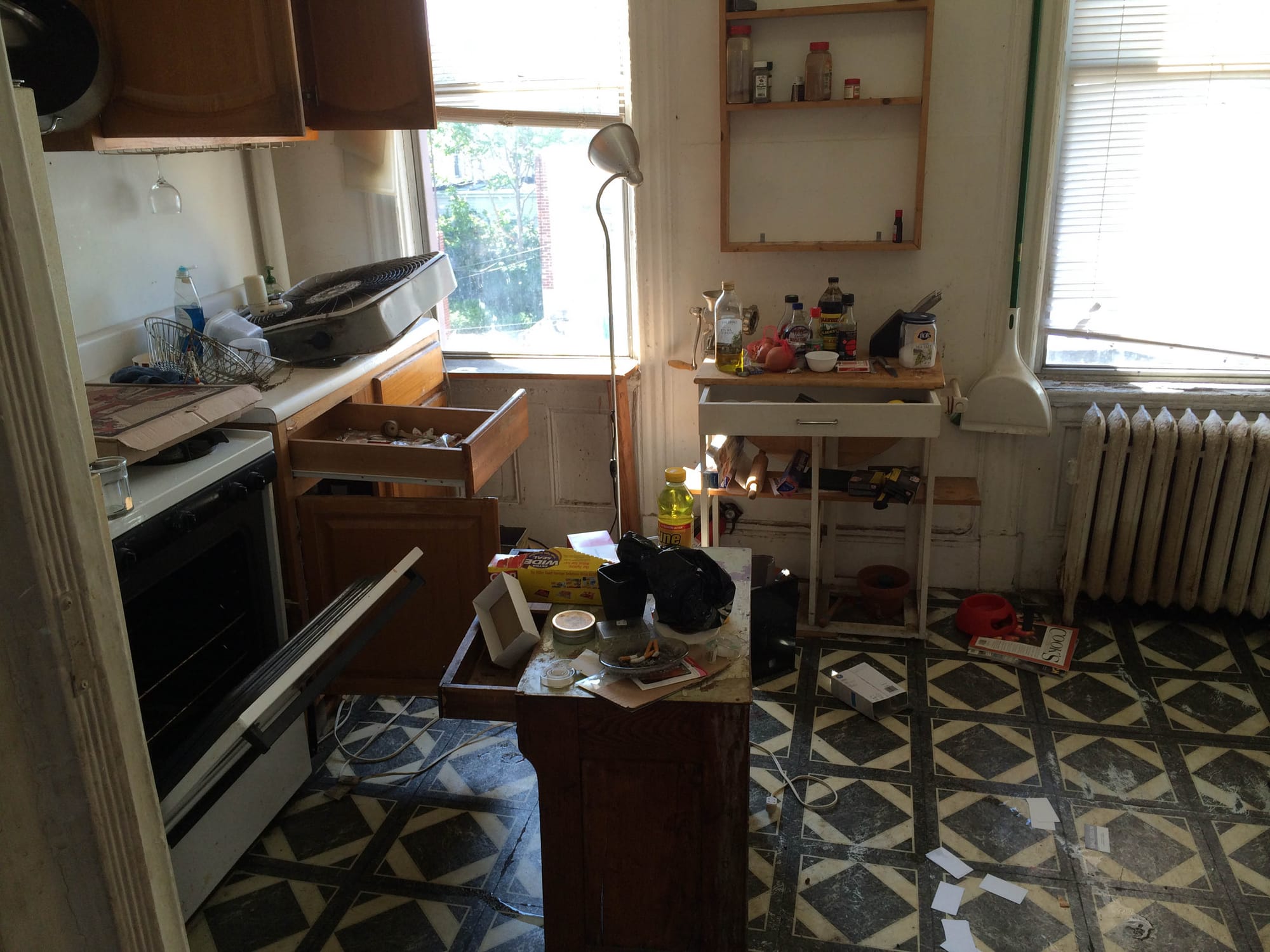
It all did happen, of course; the world did embarrass me. The first beer hit somewhere around 2016, when word got out that I’d finally agreed to write a book. Then there were more and more beers thrown, air full of pissy liquid, and then I was drowning in it, and there was more beer than air to breathe. It was as bad as I thought it would be, and then it was worse, and I tried to get angry, and to fight it, but there were hundreds of Them and only one of Me, and on some level, we all knew there was only one ending.
Then it was over, and I was here: Still talking to you, still writing, and thus, by inference, still not dead. All those years have washed away, and so have all those people — I’ve fallen out of touch even with the ones I liked. There was my transition, and the great winnowing-away of cis friends that happens seemingly every time, even though the cis friends always swear it won’t. The only person left from those years is my husband. He is the one part of my life that has remained entirely constant from then to now.
I don’t know why you love one person and not another; I don’t know how to tell you why you should love this dude, or why I do. I can tell you that there is this utter, show-stopping sincerity to the man. Early in our relationship, I used to think he was making fun of me, because he would say things so open and guileless that I had to assume they were jokes. I don’t think Creed would have sold so many records if they weren’t connecting with people. That kind of thing. Every single movie he likes is the best movie ever made. He’ll watch the best movie ever made on Friday, and then he’ll pop in a new DVD on Saturday, and that one will be even better. I thought it was a joke, or a bit, but now I think he’s serious. He really is on a constantly escalating chain of great movies, each one greater than the last, with the greatest always right around the corner.
How do you not love that? "He’s such a calm, easy-going person," one of his friends told me, "but when he likes something, he loves it so much that he seems insane." Imagine being liked that way; imagine being liked that much when you don’t even like yourself. Imagine his fondness for little things he can take care of, his tenderness with plants, and with small children, and with animals; imagine the way every dog on the planet instinctively likes and obeys him. We’ve gotten three dogs with the intention of them being Jude’s dog, only for him to effortlessly steal their hearts and loyalties, and the thing is, I get it. I’m basically a dog, when you come down to it. I’m a dumb, messy animal, but I’m loyal, and I trust him to keep me fed.
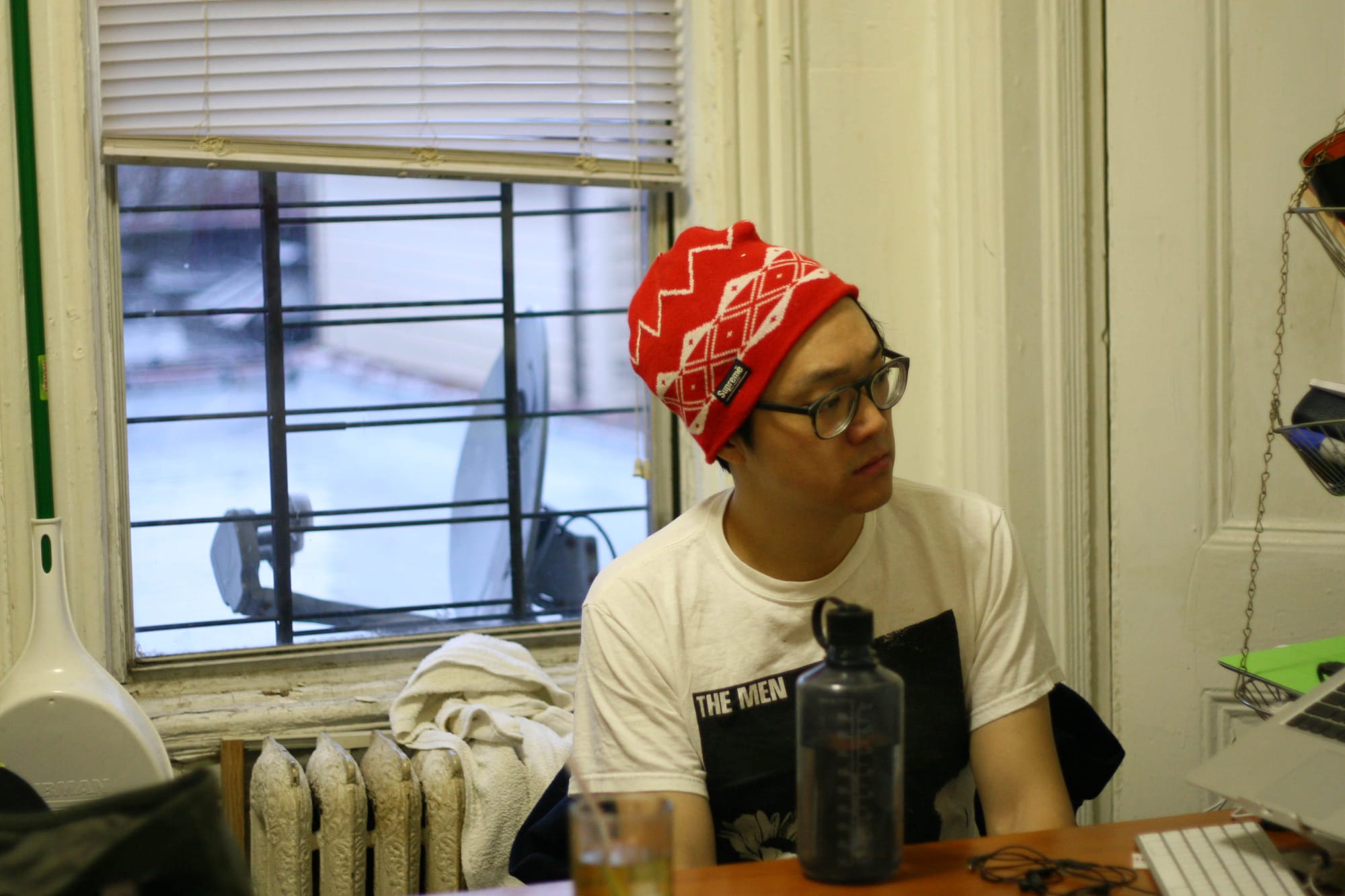
Or there’s this: A little while ago, I caught him texting one of my posts to a friend because he was mentioned in it. Apparently, he still does this. The age when it was remotely fashionable to know me was long ago. There is no social benefit that accrues to being Jude Doyle’s Boyfriend; if anything, most people would find it embarrassing. He’s been the boyfriend or the husband in my stories for sixteen years now, and I honestly thought he was used to it. But for all the people that have ever gotten furious at me for writing about them — from boyfriends to parents to (probably) every other person I’ve mentioned in this blog post — there is one person who has never asked me to redact or change a single word I've written about him. Whenever he shows up in something, he still sends it around, like, hey! That’s me! I’m the guy!
"It makes me feel important," he said. "Like I have an influence." It broke my heart — that he didn’t already know how important he was. He’s not in any one thing I write, he’s in everything I write; without him, there would be no writing, because I wouldn’t be here.
I’ll take you over them: I did. He did. It matters more than I can tell you. But the important thing is not them. It’s the I and the you, the constant reassurance that someone else is listening. The meaning of the song is not the text, it’s the structure: One narrator constantly spilling out and spiraling out, dumping an endless chain of words into the ether, and then the other, simpler voice, which only ever says the same thing, less with its words than with its presence — I’m here. I’m here. I’m here.
He and I have been talking about death lately — not in any gloomy way, just acknowledging that it happens. We were driving over the hills, past a sunset, and he pointed to it.
"That’s why I don’t want to die," he said. "I love seeing that."
"Mortality gives life meaning," I said. "We live because we die. The sunset matters more because you only get so many sunsets, because you have to appreciate it while you’re here."
"Nope," he said. "I could see every single sunset, and I would always love it. So I’ve decided I’m not going to die. I have to see every one."
I really think he would, if he could. I really think his love would remain unaltered. The earth could be burning to a cinder, and he’d be the last man on it, and when the sky went orange, I think he’d be happy, and think to himself, good show. It would be the best sunset ever made, until the next one. That’s how he is.
I don’t feel that way about anything but him. Every time he shows up, it’s the best time he’s ever showed up. I will not always have him; I will try to have him for the rest of my life, or the rest of his, which is as close to always as people are allowed to get. The meaning is in the repetition, one voice breaking apart and the other pulling it back together, the constant back and forth between them. It’s the word I hear Patti Smith sing every time the song ends, although she’s never once sung it: Home.
There you go. More vampires on Halloween, I promise – I'd just been working on this one for a few months and wanted to get it out quick so I could stop adding to it.
As your reward for making it to the end, book announcements: Clayface: Celebrity Dirt #4 is still on sale at comic shops and the usual digital outlets. Issue #5 will be out on November 11. You can also pick up Dead Teenagers in trade paperback at any self-respecting bookstore – and on the Internet, where no-one respects themselves, least of all me.