Das Room: Possession (Andrzej Żuławski, 1981)
You're tearing me apart, Andrzej!
Southern Gothic evangelical horror comic Be Not Afraid makes its triumphant return to comic stores January 28, 2026. You can get the full preview over here. Be prepared: FOC for the sixth and final issue is January 19.
Dead Teenagers, a slasher about getting stuck and growing up, will be out in March of 2026 from Oni Press, with art by Caitlin Yarsky. You can learn more and see a few pages here.
Finally: DILF: Did I Leave Feminism, my third book of non-fiction, is available wherever books are sold, via Bookshop.org, and (in smell form) at Black Phoenix Alchemy Lab.
On January 27, the DILF World Tour continues with a stop at Literary Arts in Portland. Learn more here.
I watched Possession five or six times before I got it, and every time, it felt like a different movie. It’s so bizarre that it’s actually hard to remember — there are so many strange and unconnected incidents that trying to recollect them all is like carrying water in your fist. It’s less like watching a movie than spying on someone else’s nightmare: None of it makes sense, but by the end, you know a whole lot of compromising information about the dreamer.
Which is to say: Possession is an uncomfortably intimate movie. It always feels like something we shouldn’t be seeing. Ari Aster reportedly loves it, and it’s easy to spot the genesis of Hereditary or Beau Is Afraid in here: Claustrophobic family dramas about people in the grip of convulsive, histrionic emotion. But to my mind, the film Possession most strongly resembles is Tommy Wiseau’s The Room. Both Possession and The Room play like the cinematic version of a drunk guy who recounts his divorce with such a complete lack of self-awareness that you wind up certain she was right to leave him. Also, both contain uncomfortable sex scenes, glazed stares, and Europeans shrieking at the top of their lungs.
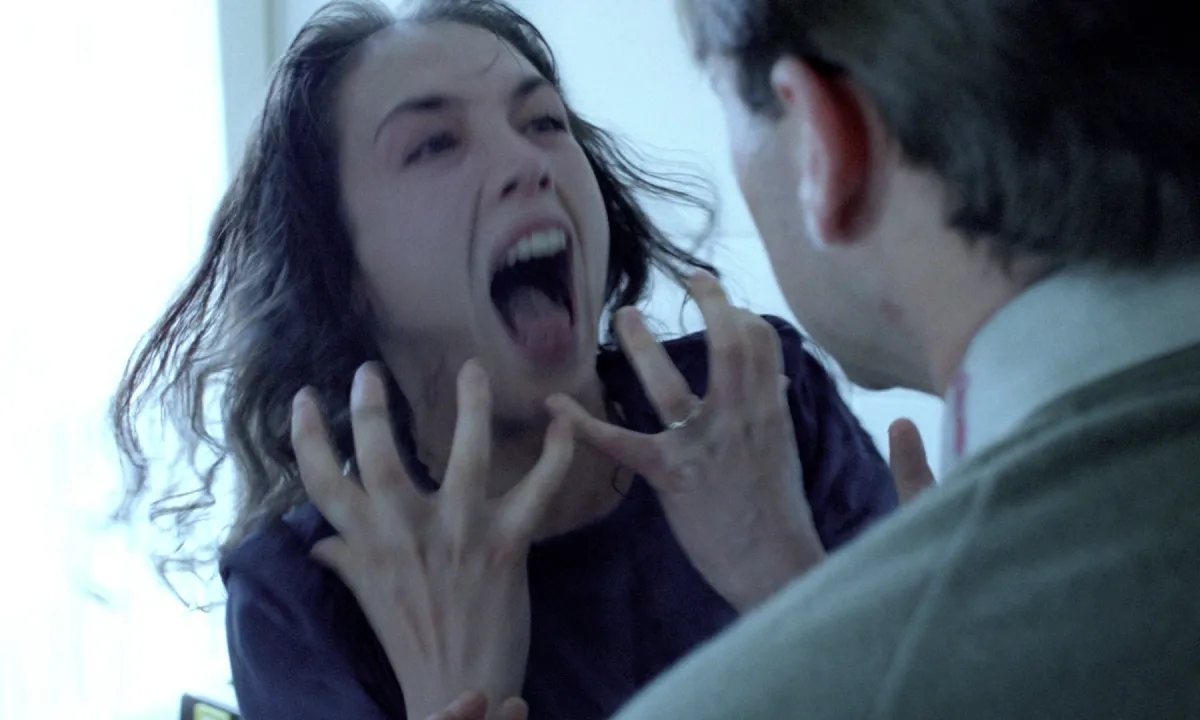
So Possession is both very funny — albeit a cringey, self-conscious “funny,” the kind of nervous laughter that arises from the need to distance yourself — and very scary, often in the same moment. It’s the kind of movie where (in its most famous scene) Isabelle Adjani screams her head off in a public subway station for three straight minutes before leaking cum and blood from all her orifices, and this is never meaningfully explained; the idea that something supernatural is happening is less upsetting than the idea that it isn’t, and that maybe this is just what it looks like when she’s having a bad day.
It’s movie built on huge public displays of emotion that is also terrified of emotion — it portrays feeling as something that takes us over, warps us, turns us into something bestial and shrieking, literally wallowing in a self-created puddle on the floor. Adjani’s movements, in that subway scene, are disturbing because they are intensely private; there’s something orgasmic in their abandon, but they also have the twitchy, repetitive quality of stimming, and the unearthly contortions of the “hysterics” photographed in La Salpetriere. This is someone who has gone so far into her own experience that she’s forgotten what she looks like. That makes her a monster and mother of monsters. That makes her evil.
It’s not ultimately uncommon for men to depict women’s emotions as terrifying and baffling and even, somehow, supernatural — but it’s rare for a movie to be as explicit about it as Possession. This isn’t an “emotional” movie; it’s a deeply repressed movie in which the terror derives from the characters’ inability to keep their emotions from rupturing through the surface. That it’s a woman who plucks the fruit and causes the Fall goes without saying: That’s what women in these stories do.